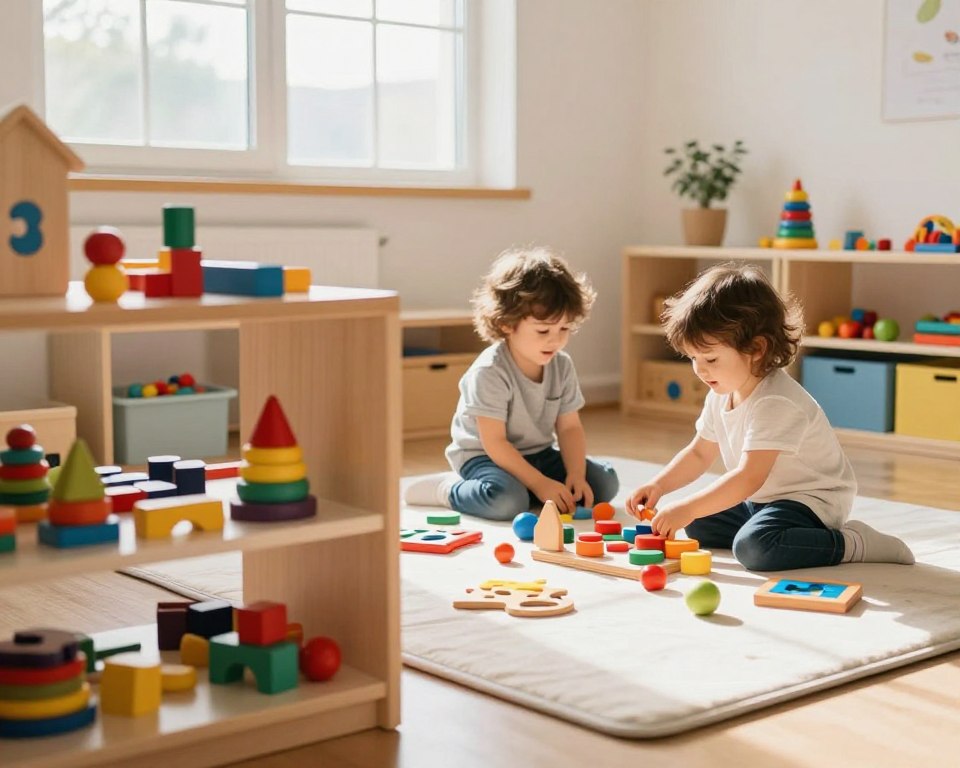
Does your living room sometimes look like a playroom explosion? You’re not alone. Many caregivers feel overwhelmed by the sheer volume of playthings their little one accumulates.
What if there was a simple, thoughtful way to cut through the clutter and spark more meaningful play? The Montessori approach offers just that—a practical system of regularly changing what’s available.
This method isn’t about having a perfect, minimalist home. It’s about creating space for your child to focus deeply. By offering fewer options at a time, you encourage independent exploration and problem-solving.
The guidance comes from real parents and educators who’ve seen the transformation. You’ll discover strategies adaptable to your family’s unique needs and living space. The result? A calmer environment and the joy of watching your child engage with their toys with fresh wonder.
Key Takeaways
- This approach helps manage clutter and reduces overwhelm for both you and your child.
- Rotating play materials promotes deeper focus and longer attention spans during play.
- It encourages independent learning and problem-solving skills naturally.
- The system is flexible and can be tailored to any home or child’s age and interests.
- You’ll notice a more peaceful and organized play space almost immediately.
- Children often rediscover and appreciate their belongings with renewed excitement.
- Simple, actionable tips make this method easy to start without a major lifestyle overhaul.
Understanding Montessori Toy Rotation and Its Importance
Imagine your little one, deeply engrossed in building a block tower, their focus unbroken by a sea of other playthings. This is the heart of a simple yet powerful method. It involves regularly changing the selection of materials available to your child.
The core idea is “less is more.” Offering fewer options at a time isn’t about deprivation. It creates the perfect conditions for deeper, more meaningful engagement.
Think about your own experience. Have you ever spent an evening scrolling through streaming services, unable to choose? Children feel that same overwhelm. Studies show that with fewer choices, kids spend more time exploring each one.
What Is Montessori Toy Rotation?
Simply put, it’s a system of keeping only a curated few playthings accessible. The rest are stored out of sight. You then swap them on a regular basis. This way of managing play materials is central to the Montessori method.
Why Fewer Toys Can Lead to Deeper Play
An overwhelming number of options scatters attention. A focused selection allows for true concentration. Your child learns to solve problems creatively with what they have. Old favorites feel magical and new when they reappear. This fosters a calm space where imagination can truly flourish.
Benefits of a Curated Toy Rotation System
The magic of a simplified play space isn’t just about tidiness—it’s about unlocking your child’s potential for deep engagement. Imagine a calmer home where your little one plays with purpose. You’ll feel the relief of a system that works, replacing chaos with harmony.
Enhanced Focus and Independent Play
With fewer choices, children naturally dive deeper. They aren’t flitting from one thing to another every few minutes. This builds a longer attention span and encourages them to explore independently.
You’ll witness true concentration. It’s the foundation for all learning. The benefits of this focused play are immediate and profound.
Promoting Cognitive and Motor Skill Development
Watch as your child discovers new ways to use the same items. Stacking blocks becomes a math lesson, then a story. This flexible thinking is real cognitive development in action.
Physically, they refine motor skills by manipulating objects in creative combinations. A curated selection, like peaceful play materials, supports this beautifully.
Bonus benefits include easier cleanup and less clutter. Your family reclaims living space and enjoys a more peaceful environment together.
How Many Toys Should You Rotate?
Let’s talk numbers—how many items should be on your child’s shelf? There’s no single magic number that fits every family. The goal is a curated selection that feels just right for your little one’s development.
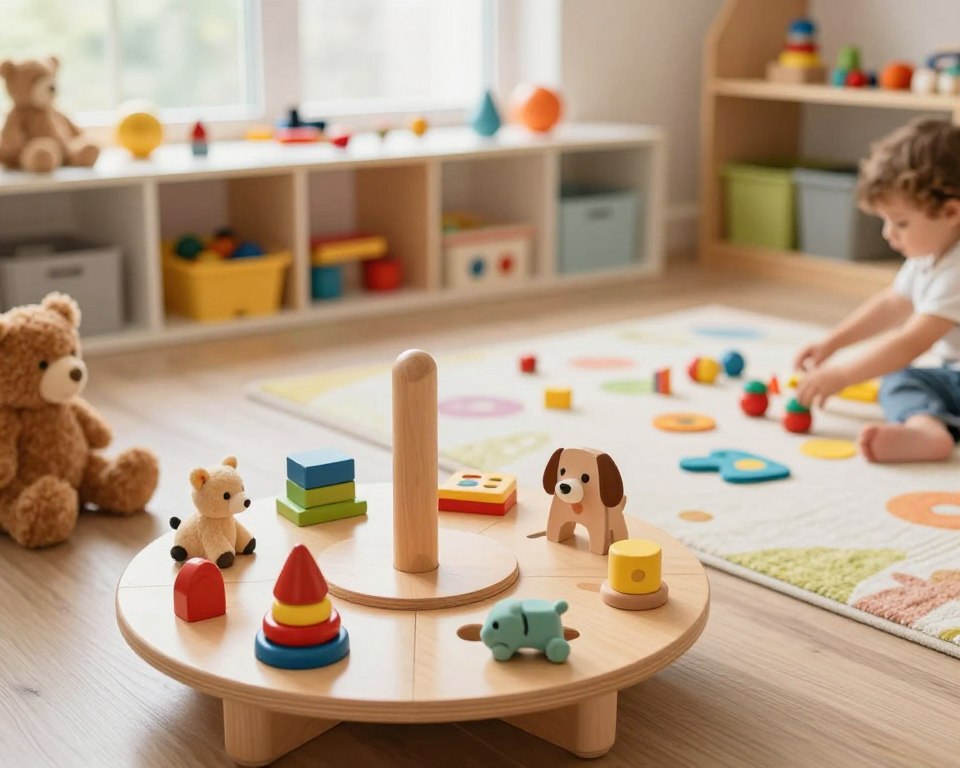
Think of these guidelines as a helpful starting point. You can always adjust based on what you see during playtime.
Age-Based Guidelines for Toy Rotation
Your child’s age is a great benchmark. For a baby (0-12 months), 4 to 8 sensory-focused toys are perfect. Toddlers (1-3 years) often thrive with 8 to 16 items.
Preschoolers (3-5 years) can handle up to 20 toys while still enjoying deep play. Some experts find 8-12 rotating items to be the sweet spot.
Tailoring the Number to Your Child’s Interests
The optimal number also depends on the type of playthings. Open-ended blocks or art supplies spark endless ideas, so you need fewer. Simpler items might require a slightly larger set.
Watch your child. Some kids love deep focus with just a few options. Others enjoy more variety. The key is to include different categories—like building, pretending, and moving—to nurture all skills.
This thoughtful approach helps you rotate their playthings without overwhelm. A smaller, well-chosen collection is more than enough to keep them engaged and learning.
Timing and Frequency: When to Rotate Toys
When should you swap out those play materials? The answer lies in observation, not dates on a schedule. Unlike rigid parenting rules, this timing is beautifully flexible. It responds to your little one’s signals.
Many families find success changing items every one to two weeks. Remember, this is just a helpful starting point. The true guide is your child.
Recognizing Signs of Boredom
Watch for specific cues. Is an item sitting untouched for days? Are interactions brief and unfocused? You might notice more whining or requests for screen time.
Sometimes, playthings are used inappropriately, like throwing. This often means an item is too easy or too hard. It’s a clear sign to put it away for now.
Observing Engagement Levels
Deep absorption tells you everything. Is your child spending extended time with their items? Are they using them in creative ways? This means the current selection is working well.
Some favorites align with their current developmental interest and have longer staying power. It’s perfectly fine to keep these out consistently.
Trust your instincts. The rotation time can vary from week to week. Stay responsive, and you simply can’t get it wrong.
Setting Up Your Montessori Toy Rotation System
Setting up a simple system for play materials is easier than you think. This isn’t about achieving perfection. It’s about creating a functional method that makes your life smoother.
Sorting and Categorizing Toys
Begin by gathering all your child’s toys in one spot. You might be surprised by the total! Then, group them into clear categories.
Think building blocks, pretend play items, puzzles, and books. This helps you see what you have and plan a balanced set of activities.
Creating a Flexible Rotation Schedule
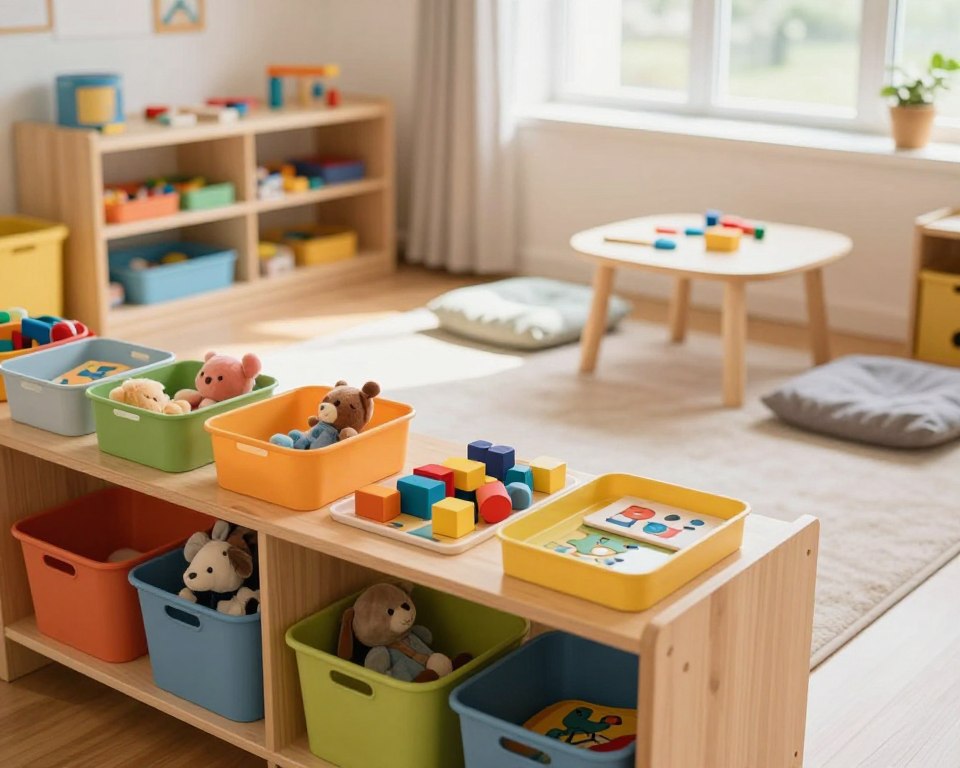
Next, choose a few items from each group to display on low shelves. Store the rest in labeled bins. This keeps your storage organized and easy to access.
Rotate your collection every week or two. Watch your child’s interest to guide the timing. This way, old favorites feel new again.
Involve your little one in the process when you can. It builds ownership and shows them that their things are simply taking a break.
Storage Solutions for a Clutter-Free Play Area
Whether you have a dedicated room or just a corner, clever storage solutions can transform your child’s environment. The goal is a calm, functional space where everything has a home.
Utilizing Low Shelves and Open Displays
Start with low, open shelves at your child’s height. This invites independent choice and makes cleanup easy. Arrange a few activities with intentional spacing to avoid visual clutter.
This setup is the heart of an organized play area. Your little one can see and reach their cherished things.
Organizing Hidden Storage and Bins
For items not in use, think “a place for everything.” Labeled bins or clear containers are perfect. Store art supplies in jars and smaller activities in boxes.
In small homes, use under-bed boxes or baskets behind furniture. The key is keeping the area tidy and your sanity intact. You’ll never hunt for a missing puzzle piece again.
montessori toy rotation tips: Enhancing Engagement and Learning
This approach shifts the goal from mere organization to nurturing your child’s natural curiosity and concentration. These strategies are about fundamentally enhancing how your little one engages with their world.
Watch closely. What captures their attention? Build your swaps around these passions. When items align with a current developmental focus, engagement deepens and learning accelerates.
Notice if a plaything is ignored or misused. It might be too simple or too challenging. Swapping it for a better-fit option immediately improves the play experience.
Try rotating within a beloved theme. If your child is deep-diving into animals, keep related activities available. Vary the type—figurines one week, puzzles the next.
Involve your preschooler in choosing what stays out and what rests. This builds decision-making skills and respect for their cherished things.
Occasionally introduce something completely novel to spark fresh curiosity. It could be a new puzzle or a repurposed household object.
Remember to make changes gradually. Younger children need familiar points of reference. Swapping just a few items at a time respects this need while providing welcome novelty.
You’ll witness a beautiful transformation: a calmer, more focused child and a more harmonious family space.
Customizing the System for Your Child and Home Environment
The true beauty of this method lies in its flexibility—it molds perfectly to your family’s unique rhythm. No two households are identical. Your most successful system will be the one tailored to your child, your living space, and your daily flow.
Perfection is not the goal. Functionality is. This is about creating a way of managing play things that brings peace, not pressure.
Involving Your Child in the Process
Transform this from something you do for them into something you do together. Involving your little one builds autonomy and reduces resistance.
A toddler can help return items to their shelf. A preschooler can choose between two options. An older child can discuss their current interests. This investment helps them respect and maintain the organized environment.
Adapting to Space and Developmental Needs
Your home might be a dedicated playroom or a shared living area corner. Both work beautifully with creative storage. The system must serve your entire family.
It also evolves with your child’s age. Infant selections focus on sensory discovery. Toddler activities support emerging independence. For preschoolers, it nurtures imagination and motor skills.
Start small. Maybe just organize the visible toys this week. Add storage bins next. Build your way forward, one comfortable step at a time.
Conclusion
Your journey toward a more intentional play space starts with a single, simple step. You’ve explored a powerful idea that can transform your home environment and your child’s engagement.
Remember, this system isn’t about perfection. It’s about making thoughtful choices that support your little one’s development and joy. Start with just one change that feels doable.
Life with young children is wonderfully unpredictable. Some weeks your shelves will be tidy; other weeks, cherished things will be everywhere. Both are perfectly okay.
The core principle is to follow your child’s lead. Observe their interests and adjust your selection. The benefits—like enhanced focus and calmer play—build over time.
Trust your instincts. Choose one strategy from this guide to try this week. You’re creating a space where curiosity and happy learning flourish.