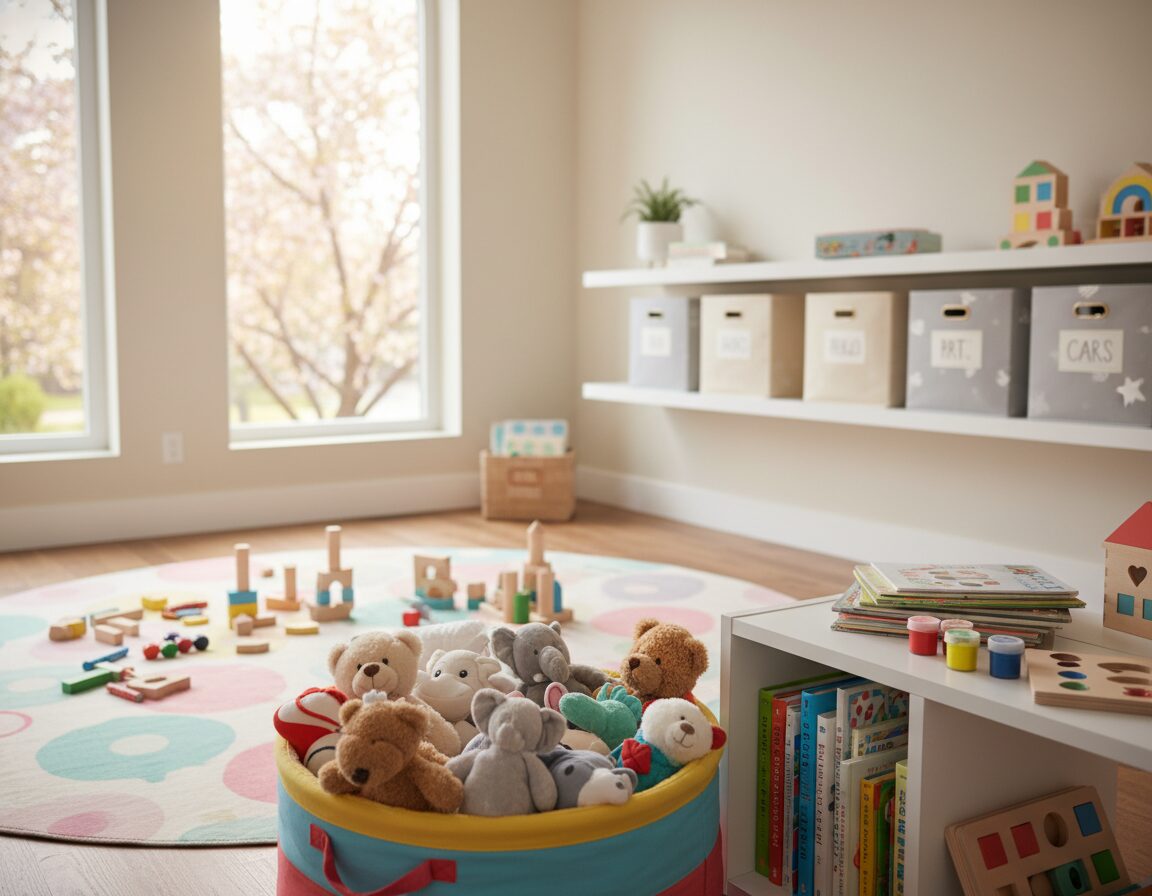
Did you know the average American family dedicates over 100 hours a year just to picking up playthings? That’s time we could all spend making memories instead.
If your living area feels like it’s constantly under siege by a colorful plastic avalanche, you’re not alone. Balancing the magic of childhood with a peaceful home is a universal challenge.
I learned this firsthand. After moving into our spacious North Carolina house, my trusty IKEA cubbies—a system that worked in four previous homes—just couldn’t keep up. The open layout meant the mess was always in view.
We realized a new approach was needed. Reclaiming your space doesn’t mean stripping away the fun. It’s about creating a system that honors your child’s need to explore while keeping your sanity intact.
It is entirely possible to have a beautiful, functional home where your family can relax without being surrounded by chaos. Let’s explore how.
Key Takeaways
- Managing playthings effectively is essential for a calm home environment.
- Traditional storage often fails in unique or open living spaces.
- Creative organization can coexist with fun and imaginative play.
- The goal is a system that works for both children and adults.
- A peaceful living area reduces stress for the whole family.
- Simple strategies can dramatically reduce daily cleanup time.
- Your home can be both kid-friendly and aesthetically pleasing.
Introduction to Decluttering Your Family Home
The chaos of scattered playthings can quietly drain your energy and cloud your family’s daily joy. It’s more than just a messy floor. It’s about reclaiming the calm and connection in your home.
Starting this process might feel big. But it begins with a simple shift in perspective. See your living area not as a problem, but as a space waiting for its potential to be unlocked.
Understanding the Importance of a Clean Play Area
Creating a specific zone for your children’s activities is a game-changer. This dedicated spot tells a child, “This is your place to imagine and create.”
When kids have a clear area, their play becomes more focused. They engage deeper with their toys instead of just skimming the surface. This fosters wonderful independent play.
How a Clutter-Free Space Benefits the Whole Family
The mental lift is immediate. A tidy room reduces visual noise for everyone. Parents and children both feel a sense of calm when the space is serene.
Involving your family in the process teaches valuable lessons. Kids learn to care for their belongings. You all get to enjoy peaceful evenings without tripping over stray items.
We found that simplifying what was available gave us more quality time together. The benefits truly ripple through your entire home life.
Decluttering Essentials: Remove, Sort, and Donate
What if you could see every single plaything your family owns, all at once, to make clear decisions? This powerful idea is the first step toward a calmer home. The process boils down to three actions: remove, sort, and donate.
Step-by-Step Guide to Clearing Out the Clutter
A professional organizer often starts by emptying the entire room. Take all those items out and pile them in a central spot. Seeing everything together is eye-opening.
Next, sort them into simple categories like dolls, blocks, or games. This shows you exactly what’s in your house. Involve your kids here. Ask them which toys they truly love and use regularly.
Tips from Professional Organizers on Minimalism
For playthings no longer enjoyed, consider donating. Local schools or churches are great places. This helps other families and clears your space.
Reducing the volume makes the remaining toys more special. Don’t try to do everything in one day. Small steps toward better storage make a big difference.
Remember, minimalism isn’t about having nothing. It’s about making space for the things that bring real joy to your home.
Maximizing Multi-Purpose Living Areas
You don’t need a separate playroom to keep your kids’ toys organized and your living room stylish. Combining these spaces lets your family enjoy time together while maintaining a peaceful atmosphere.
Strategies for Combining Playrooms with Living Rooms
In our 20-foot long family room, we created a functional play area without sacrificing style. We floated our sofa and TV to carve out a 5-foot wide zone along the wall for an art station.
This smart approach works well for families who want children nearby during work or relaxation. You can designate a specific corner for playthings, keeping the rest of the room calm for adults.
Use furniture to define boundaries for the play space. This helps kids stay engaged in their own zone. Even in smaller living rooms, creative storage keeps toys accessible but not underfoot.
Our layout let us enjoy the same room together, whether reading or playing with blocks. Your main living area can beautifully serve multiple purposes with thoughtful planning.
Essential Toy Clutter Solutions for Families
Effective organization hinges on matching your storage choices for your children’s toys to how your family actually lives. It’s not about buying the prettiest bins. It’s about creating a system that reduces daily stress.
Identifying the Right Storage Options for Your Home
Finding the right approach is a personal journey. It depends on your kids’ ages, your layout, and daily routines. What works for one household might not suit another.
We recommend furniture that serves a dual purpose. An ottoman with a lid can hide toys while looking beautiful. This keeps your main living area serene.
When you have little ones, the best organizers are low and easy to open. Children are more likely to put toys away if they can reach the bins. Labeling with pictures helps preschoolers know where things go.
Don’t be afraid to test a few different methods. Try open baskets for big blocks and closed boxes for puzzle pieces. See what encourages independent play and tidy-up time.
By keeping playthings organized logically, you reclaim your space. The constant tidying becomes less overwhelming. You gain precious time and peace of mind.
We found that consistent containers helped our kids understand where belongings belonged. Same-colored bins for similar items created clear visual cues. This made end-of-day cleanup a predictable routine.
Remember, the goal is an environment where your household feels comfortable and free to play. The right storage supports joyful moments without background chaos.
Using Real Furniture for Hidden Storage
The secret to a sophisticated family space often lies in the furniture you choose for storage. Pieces like media stands or bookcases can discreetly hold children’s items. This approach keeps your main living area looking grown-up, not like a preschool.
Shelving Options with Hidden Compartments
Closed cabinets are perfect for a large collection of toys. They keep everything out of sight, maintaining a tidy and sophisticated feel. Furniture with doors or drawers works wonders for hiding playthings.
Open Shelving with Decorative Baskets
For a more accessible look, try open shelves with baskets. A simple woven bin can hold a surprising amount of kids’ stuff. It still looks like stylish decor in your family room.
We often use decorative baskets to store the children’s favorite toys. This makes it easy for them to grab what they need during play. It’s amazing how much you can tuck away with furniture designed for a grown-up home.
By choosing the right storage, you ensure your room remains a place you love to spend time as a family. The right pieces support both beauty and function seamlessly.
Creating Dedicated Zones for Play and Art
We discovered that over 50 different art activities could fit neatly into one organizer, keeping our room surprisingly tidy. This simple idea sparked a bigger one: giving every activity its own special place.
Defined zones in your home create a magical sense of order. They tell your kids exactly where their world of imagination begins and ends.
Designing Special Areas for Toys and Creative Projects
Designing a dedicated place for art supplies is a game-changer. It invites your children to explore their artistic side whenever inspiration strikes.
We use a rolling organizer to hold all those creative treasures. This mobile station keeps crayons, paper, and other items contained and ready for action.
Having a specific spot for these projects means less searching and more creating. Your kids know right where to go to start their next masterpiece.
Optimizing Furniture Layout for Clear Play Zones
Think about where your child plays most often. Place their favorite toy collections in an easy-to-reach spot.
A mobile cart is perfect for this. Kids can roll their creative station to wherever they are building or drawing.
When you define these areas, you give your children wonderful freedom. They can spread out and imagine, while your main living space stays organized and functional for everyone.
Alternative Storage Strategies and Small Toy Solutions
Tiny playthings have a magical way of disappearing into the abyss of a living room. Those little treasures—puzzle pieces, building sets, and art supplies—can create a big mess if they aren’t contained.
The right storage approach makes all the difference. It turns chaos into a manageable system your kids can use.
Innovative Organizer Ideas for Tiny Items
For small items like LEGO sets or game pieces, clear containers are a game-changer. We found a 12-pack of these boxes perfect for organization.
Each container holds a complete activity. A standard shoe box, about 13″ by 7-1/2″, works wonderfully too. This keeps all the pieces for one puzzle together so nothing gets lost.
Multipurpose Bins and Containers for Quick Cleanup
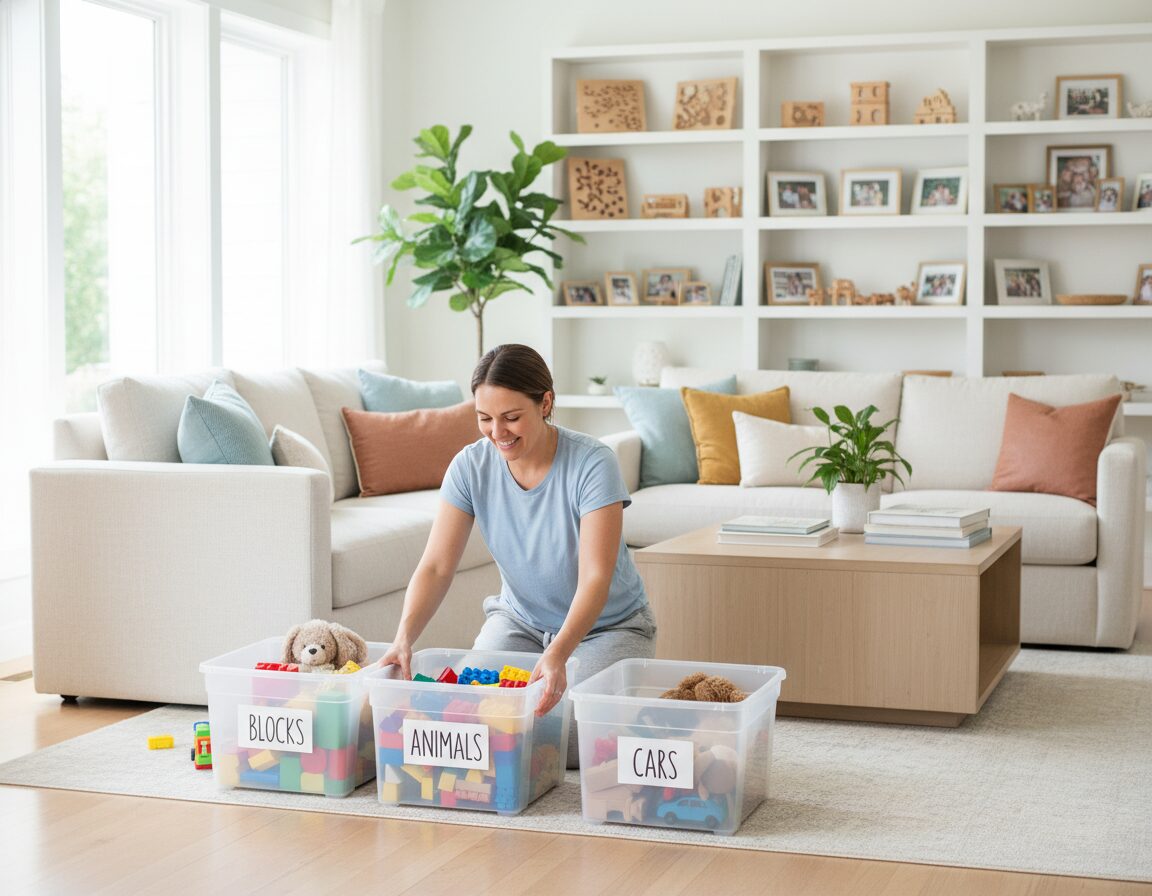
We love using clear bins because kids can see what’s inside. This encourages them to play with different sets and put them back.
Assign a dedicated bin for each category of toys. Cleanup becomes a fast, simple task. Storing art supplies and puzzles separately prevents mix-ups.
These small strategies are the best way to manage many toys. The right containers keep your space serene and functional.
Maintaining a Clutter-Free Family Living Room
As a mom to two young boys, I’ve found that consistency beats chaos every time when it comes to our shared spaces. The key isn’t a perfect system, but one that everyone can follow day after day.
Routine Cleaning and Decluttering Habits
We built a simple daily reset into our evening. Before bedtime, we all spend ten minutes returning playthings to their designated storage. This ensures we wake up to a serene family room.
Having a specific spot for every item is crucial. My kids know exactly where their favorite toys go. This clarity turns cleanup into a predictable game rather than a chore.
Spending a little time each day on maintenance prevents the need for weekend marathons. Our living room stays a peaceful place where we can truly connect.
Teaching children to respect a shared space is a valuable lesson for parents to impart. It fosters responsibility and helps everyone enjoy our home more. Simple habits make a lasting difference.
Conclusion
Your home can be both a launchpad for your child’s imagination and a retreat for your own peace of mind. Reclaiming a serene space for your family is a rewarding journey. It brings more joy and calm to your daily life with your children.
Remember, you don’t need to be a professional organizer. Take your time to find the right storage solutions. The perfect bin or box for your puzzles, art supplies, or building sets makes all the difference. For gentle guidance, consider the Montessori way to sort and respect your child’s items and pieces.
Small, consistent habits create the biggest change. Your living room can become a cherished place for everyone. You have the power to build a home that supports your family’s needs and cherished moments.