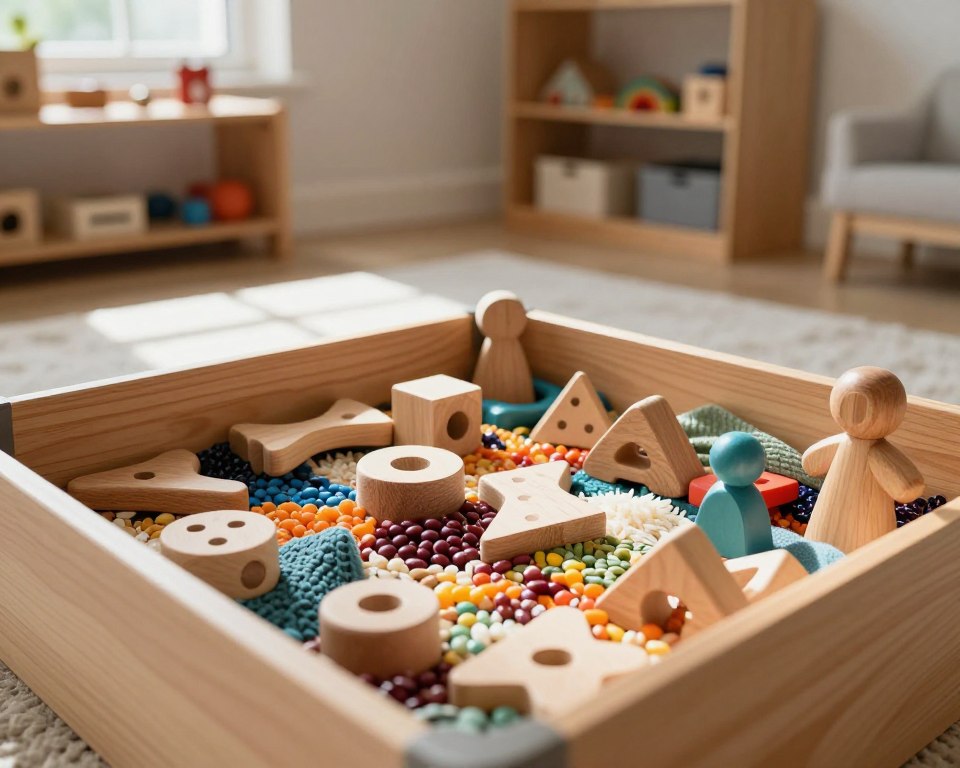
“Play is often talked about as if it were a relief from serious learning. But for children, play is serious learning.” – Fred Rogers
This quote captures a truth every parent feels. You want playtime to be more than just fun. You want it to be meaningful, to spark curiosity and growth.
Imagine a simple, beautiful setup where natural materials meet hands-on discovery. This guide is all about creating that magic. We’ll explore how a sensory bin filled with wooden treasures can become a world of exploration for your child.
You’ll discover easy setup ideas, creative activities, and practical care tips. We focus on sustainable, eco-friendly choices that are kind to the planet and cherished by little ones.
The best part? This approach is accessible. Great options exist at various price points. Let’s begin this journey into tactile exploration together.
Key Takeaways
- Sensory play with natural materials supports serious learning and development in a fun way.
- Wooden play items offer unique sensory benefits, being durable and eco-friendly.
- Setting up an engaging activity station is simple and can fit any budget or space.
- This guide provides immediate, actionable ideas you can use today.
- Open-ended play encourages creativity and holds a child’s attention longer.
- Choosing sustainable options makes playtime responsible and enriching.
Introduction to Sensory Bins and Wooden Toys
At its heart, childhood discovery is about connecting with the world through direct, hands-on experience.
Overview of Sensory Play
This is the essence of sensory play. It’s how a child learns about their environment through touch, sight, and movement.
A sensory bin creates a perfect, contained space for this exploration. Set it up on a low table or in a designated area. Fill it with materials that invite scooping, pouring, and sorting.
This simple activity turns everyday moments into rich learning. It helps young minds process new information and build critical neural connections. Children gain confidence as they investigate.
What Makes Wooden Toys Unique?
Natural items offer qualities that plastic simply cannot match. They have a warm, substantial feel and a beautiful grain you can see and touch.
Choosing tools made from sustainable wood is a safe, responsible choice. They are non-toxic and built to last for years. These often become cherished family treasures.
This approach aligns perfectly with Montessori principles. It encourages child-led, active exploration with real materials. The authentic feedback from the weight and texture supports genuine play and growth for your kid.
Sensory Bins with Wooden Toys: Key Benefits for Child Development
Every scoop and pour during playtime is actually building the foundation for your child’s future skills. This hands-on activity offers profound developmental advantages.
Enhancing Fine Motor Skills
When your toddler uses a small scoop or squeezes tongs, they are doing serious work. These actions strengthen the tiny hand muscles needed for writing and buttoning clothes.
Specific motor skill benefits include:
- Pincer grip development for holding pencils.
- Finger isolation for precise movements.
- Hand-eye coordination for accurate pouring.
- Bilateral coordination, using both hands together.
The natural weight of good tools provides helpful feedback. This teaches cause and effect. The coordination practiced here directly helps at the family table during meals.
Encouraging Independent and Creative Play
This type of open-ended exploration turns kids into little scientists and storytellers. There is no single right way to play, which sparks incredible imagination.
Children naturally sort, count, and solve problems as they explore. This builds early math and logic skills. Best of all, they gain confidence by making their own choices and persisting through challenges.
Meaningful play doesn’t require a big investment. You can find quality sets at various price points to start this rewarding activity today.
Setting Up Your Sensory Bin: Tips and Tricks
Your container is the foundation. A simple plastic storage bin, a low table area, or even a large serving tray works perfectly. The goal is to contain the fun, not complicate it.
Choosing the Right Sensory Fillers
Fillers bring the magic. For little ones, choose larger items like big shells or corks. Older children enjoy varied textures for complex exploration.
Wonderful materials that pair beautifully include:
- Dry rice or colored pasta
- Sand or water for experiments
- Dried beans or chickpeas
- Natural treasures like pinecones and stones
Pantry staples are a budget-friendly way to start. You can also collect leaves and petals on a nature walk.
Safety and Cleanliness Considerations
Always keep an eye on playtime. Check all items regularly for any damage.
For easy indoor play, place your bin on a washable mat or an old shower curtain. Select materials that are simple to sweep or vacuum.
Store everything in sealed containers between sessions. This keeps your fillers fresh and ready for the next adventure.
Creative Activities and Play Ideas
Unlock your child’s imagination with simple, hands-on activities that turn everyday moments into adventures.
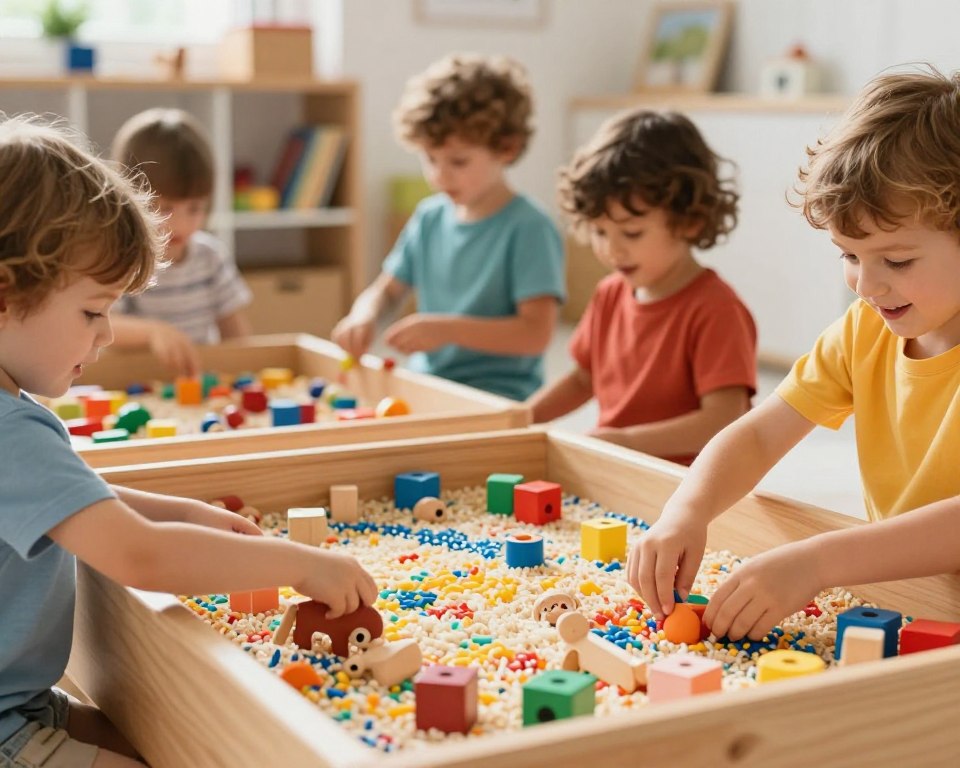
These ideas are designed to be fun and engaging for kids of all ages. You don’t need an elaborate setup. A simple table and a basic set of tools can create magical learning.
Imaginative Kitchen Play
Turn your little one into a chef. Provide scoops and spoons for pretend play. They can “cook” meals and set the table.
This activity builds storytelling skills. It also teaches practical life lessons. Your toddlers will love serving their creations.
Nature Discovery and Texture Exploration
Bring the outdoors inside. Collect smooth stones or textured pinecones. Let your child sort and explore these natural treasures.
Create a station with different fillers like sand or rice. Kids can scoop and stir to feel contrasting surfaces. This activity connects play to the world around us.
Add a color sorting game. Use tongs to organize items by hue. It’s a playful way to learn.
Try a sound exploration bin too. Fill containers with different amounts of rice. Shake them to hear various sounds.
These activities introduce early math and science concepts. They offer endless fun at a reasonable price.
Montessori-Inspired Play with Wooden Sensory Tools
The Montessori approach transforms simple moments into profound learning opportunities. It’s about following your child’s natural curiosity. This philosophy values hands-on exploration with real materials.
Natural items are perfectly aligned with these principles. They offer authentic feedback and encourage concentrated, purposeful work. Children engage at their own pace, building deep focus.
Transfer and Counting Activities
Start with a classic transfer activity. Provide two bowls and a pair of tongs. Your child moves items like beads from one container to the other.
This builds the pincer grip and hand-eye coordination. These are foundational skills for later writing. It turns the bin into a laboratory for concentration.
Next, introduce early math concepts. Ask your toddler to count out five pom-poms or ten beans. Use a small scoop to make abstract numbers concrete and fun.
This learning connects directly to practical life. The same scooping motion helps with serving food later. It’s purposeful play that builds real capability.
You don’t need expensive materials. A thoughtful set of tools at a fair price, combined with household items, creates a rich environment. Set up a dedicated station on a low table.
This empowers your child to choose their own activity. They grow in independence and confidence through self-directed discovery.
Organizing and Caring for Your Sensory Bin
A little organization transforms messy play into a sustainable daily joy. When everything has a home, you’re more likely to pull out the fun. Let’s make setup and cleanup simple.
Effective Storage Solutions
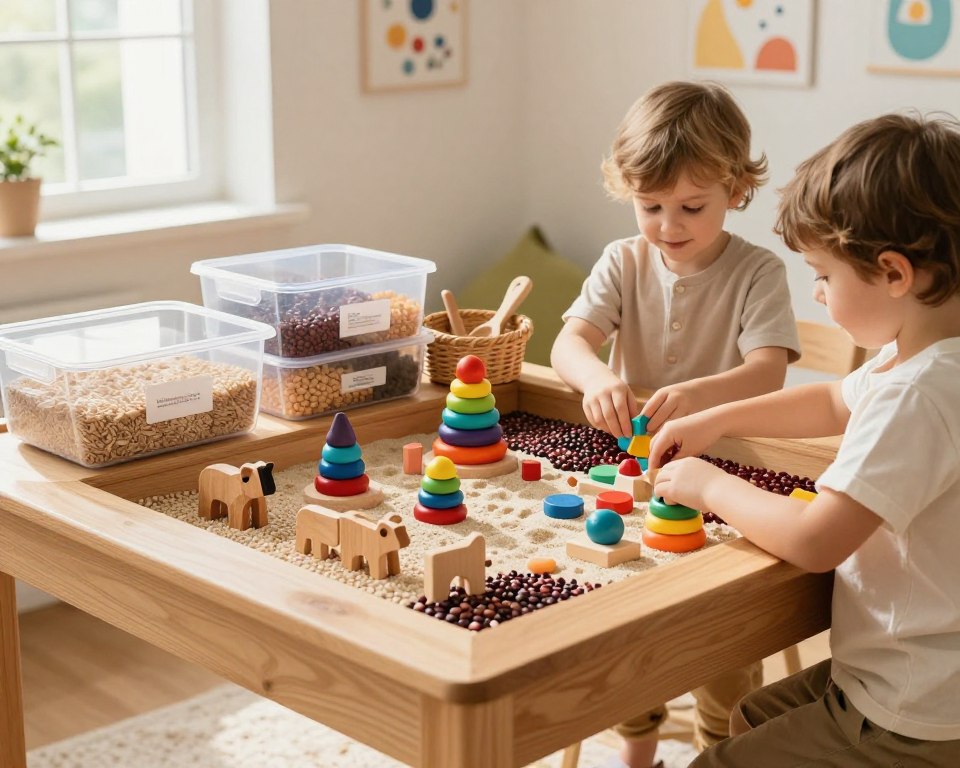
Clear containers with lids are your best friends. Store different fillers like rice or beans in separate bins. This keeps materials fresh and visible.
Designate a shelf or basket for your play tools. A simple rotation system prevents clutter. Organize multiple sensory bins by theme or season.
This way, setup is quick. You don’t need an elaborate system. A low table or a moveable tray creates a dedicated zone.
This contains the mess and reduces stress. Great solutions exist at every price point.
Tips for Cleaning and Maintaining Wooden Toys
Proper care makes these items last for years. It’s a simple routine. After play, wipe each piece with a damp cloth.
Let everything air dry completely. Never soak or submerge wooden items. This preserves the material’s quality.
Check occasionally for rough spots. A light sanding can fix them. Quality wood is durable and built for daily use.
Keep a handheld vacuum nearby for quick cleanups. Use a washable mat under your bin. Even toddlers can help with simple routines.
The small amount of time you invest pays off. It leads to more independent play time and lasting developmental benefits. Your child’s favorite tools become cherished treasures.
Conclusion
You now have all the pieces to create a beautiful, enriching play experience that supports your child’s growth in countless ways. This journey gives you a complete roadmap.
These stations offer so much more than fun. They are powerful tools for fine motor development, cognitive growth, and fostering independence. Every kid benefits from this exploration.
It’s accessible regardless of budget. Great products exist at various price points. A simple set can become a cherished gift.
View this as an ongoing part of childhood. Rotate materials like sand or water with the seasons. Set up a station on any indoor table for year-round discovery.
The most important thing is giving your child time and space to explore. Start today with what you have. Watch them learn and grow through meaningful play.