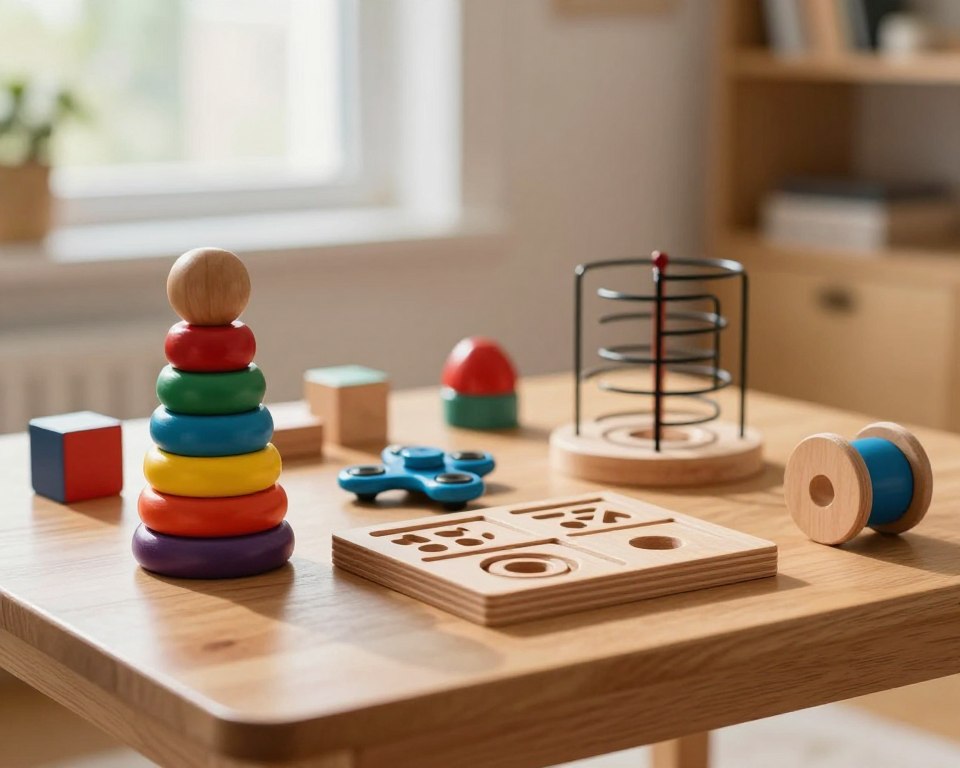
Maria Montessori once said, “Play is the work of the child.” In today’s whirlwind of screens and sounds, helping your little one do that “work” with deep concentration feels more important than ever.
You want a play environment where they can truly engage, not just be entertained. What if the tools for building this crucial skill weren’t high-tech, but beautifully simple?
Modern research points to a surprising ally: natural materials. A 2017 National Institutes of Health study found that contact with wood induces physiological relaxation. Simply touching it can calm a young child’s nervous system.
This creates the perfect mental state for focused learning. Unlike flashy electronic alternatives, these timeless treasures foster a quieter, more intentional play space.
This guide will show you how choosing the right playthings can genuinely support your child’s ability to concentrate, engage deeply, and develop the sustained attention that fuels lifelong learning.
Key Takeaways
- Natural materials like wood have a calming effect on a child’s physiology.
- Simpler playthings encourage longer, more sustained attention spans.
- Scientific research supports the link between tactile wood contact and relaxation.
- Quieter play environments are crucial for cognitive development in toddlers.
- Selecting the right tools is an investment in foundational concentration skills.
Why Choose Wooden Toys for Better Focus and Attention?
Parents today face a dizzying array of playthings, making the choice of what to bring home feel overwhelming. Why pick a simple, solid option? This choice is rooted in both timeless wisdom and modern science.
Benefits for Cognitive and Emotional Development
Their beautiful simplicity is their superpower. Without flashing lights or pre-programmed sounds, a child’s own brain must fill in the gaps. This sparks imagination and builds problem-solving skills organically.
Maria Montessori favored these “real” items for a reason. They capture interest without overwhelming young senses. This creates the perfect calm for deep, sustained engagement.
The natural material has a gentle, calming effect. It helps little ones regulate their emotions and approach activities with a clearer, more focused mindset. This reduces the scattered frustration that comes from overstimulation.
Natural Materials and Safety Considerations
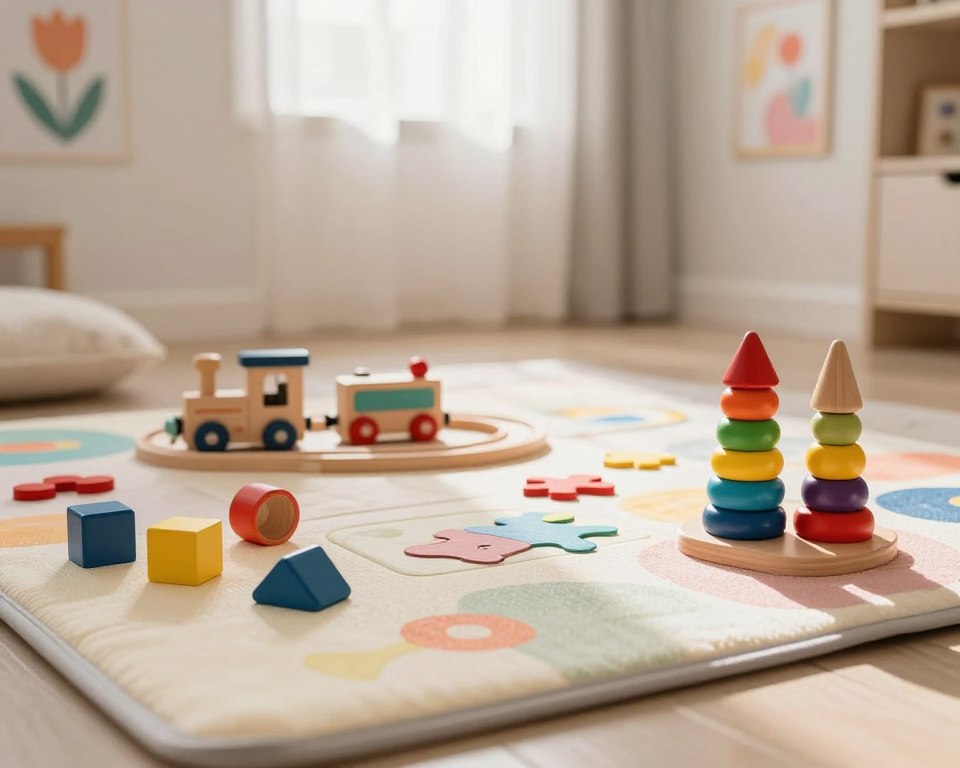
You can also rest easy about safety. These playthings are typically made from natural, non-toxic materials. They are free from harmful chemicals, making them safe for the way toddlers explore—through mouthing, throwing, and hands-on discovery.
Their renowned durability is a practical win. They last for years, often becoming cherished companions. This longevity reduces waste and provides consistent support for learning.
When children feel secure and aren’t overstimulated, they naturally settle into more meaningful play. This is where genuine concentration grows.
Exploring wooden toys for focus and attention
Research reveals a surprising truth about playtime: less can actually mean more. A 2018 study found toddlers had better quality engagement with just four items versus sixteen. This shows how a simpler selection helps little ones form closer bonds and dive deeper.
Enhancing Concentration and Problem-Solving Skills
Without batteries or preset functions, these playthings require a child’s full attention. This naturally builds longer attention spans. Simple stacks teach balance and spatial awareness. Shape sorters demand analysis, and puzzles need persistence.
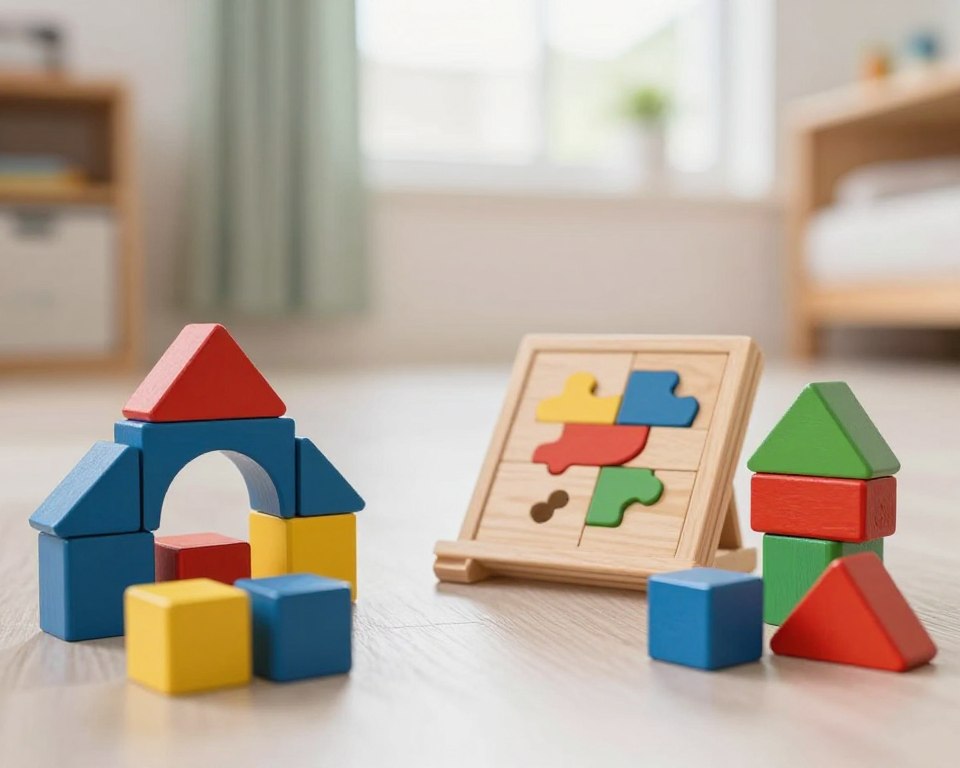
Each challenge encourages toddlers to engage deeply and work through problems on their own. They learn quiet lessons in cause and effect at their own pace.
Encouraging Imaginative and Detailed Play
The open-ended quality is a superpower for creativity. A block can be a car, a phone, or a towering castle. This encourages imaginative play in ways predetermined items cannot.
Animal figurines become characters in elaborate stories. A vehicle set transforms into an entire world. This type of pretend activity can last for extended, focused periods.
Acting out these scenarios also helps strengthen social skills. This blank canvas approach lets your child’s imagination lead, developing both creativity and sustained attention.
Top Features to Look for in Wooden Toys
Let’s talk about the practical side of play: the features that turn a simple object into a powerful learning tool. Understanding a few key features makes your choice both simple and impactful.
Durability, Eco-Friendliness, and Quality
Look for items built to survive years of enthusiastic play. This durability makes them a worthwhile investment that can serve multiple children.
Choosing sustainably sourced materials protects your child and the planet. It’s a decision that aligns your values with action.
Seek out solid hardwoods like maple or beech. They should have smooth, non-toxic finishes that can withstand how toddlers really explore.
Educational Value Through Fine and Gross Motor Development
Many playthings are designed with specific learning goals. Puzzles, bead mazes, and workbenches require little hands to grasp, twist, and place pieces.
This precise manipulation directly builds hand-eye coordination. It enhances fine motor control as children focus on connecting sight with action.
Larger items, like balance boards, engage whole-body movement. This develops gross motor skills while maintaining a child’s concentration.
The best set combines these elements. A wooden tool set includes pieces for fine motor practice while the overall play encourages spatial awareness. This multi-layered approach builds real, foundational skills.
How Wooden Toys Support Overall Child Development
The magic of simple playthings lies in their ability to nurture the whole child. They aren’t just about one skill. They’re holistic development tools that support growth across multiple interconnected areas at once.
Promoting Motor Skills and Hand-Eye Coordination
The physical manipulation required builds strength, dexterity, and coordination. This forms the foundation for everything from writing to sports.
When your toddler places a shape in a sorter or stacks a ring, they train their brain. This coordinates visual input with physical action—a skill crucial for attention.
The same precision used for puzzles helps later with buttoning clothes. Fine motor skills developed through play translate directly to real-world capabilities.
Fostering Creativity and Social Interaction
These items foster creativity by serving as blank canvases. Toddlers explore play in their own way, inventing scenarios that keep them engaged. This encourages imaginative play naturally.
When children play together, they develop language skills. They learn to negotiate, share, and collaborate.
A dollhouse encourages imaginative scenarios where toddlers practice language through pretend conversations. A vehicle set becomes a way for multiple children to create together.
Social interaction during play enhances cognitive development. Toddlers engage in conversations and explain ideas. All while maintaining focus on shared play goals.
This integrated approach supports young children in developing the whole child: physical, cognitive, creative, and social skills all grow together.
Conclusion
Your path to fostering deeper concentration starts with one intentional decision. Choosing wooden toys is more than a purchase—it’s a commitment to your child’s growth.
These classic playthings offer a calming space that encourages engagement. They nurture cognitive development, enhance motor skills, and support lasting attention.
Begin with a couple of versatile items. Studies indicate a smaller set promotes higher-quality play.
Built to last, these pieces adapt as your toddler learns. They can be treasured over years and shared with others.
Seek out options aligned with your little one’s interests. Your intuition knows what will spark their curiosity.
You provide a foundation for creative thinking and problem-solving. This gift of focused play enriches their entire learning journey.