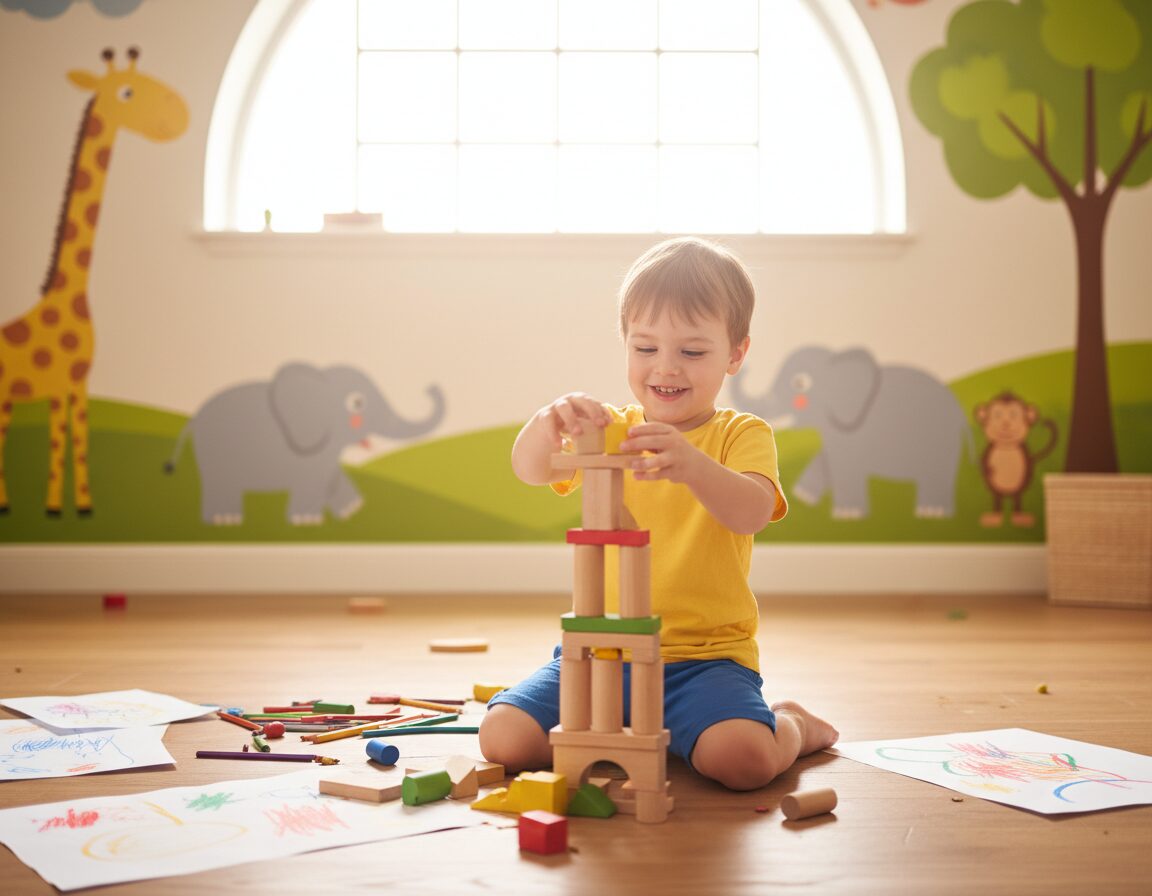
Did you know the average child in the U.S. owns over 200 toys, yet a common daily refrain is still “I’m bored”?
If your home is filled with toys but your little one seems uninspired, you’re not alone. This widespread experience points to a deeper need—a need for activities that spark the imagination rather than just fill time.
That’s where the magic of open-ended play comes in. It’s a refreshing alternative that turns a cardboard box into a spaceship and a pile of blocks into a bustling city. This type of self-directed exploration is the key to unlocking your child’s natural creativity and problem-solving skills.
This comprehensive guide is here to help. We’ll walk you through simple, effective strategies to cultivate this enriching approach at home. You’ll discover how to view everyday objects and moments as treasures for complex thinking.
By shifting focus, you can create an environment where your children thrive. They build confidence, adaptability, and a lifelong love for learning through simple, meaningful activities.
Key Takeaways
- Open-ended play builds essential life skills like problem-solving and resilience.
- It transforms ordinary household items into powerful tools for imagination.
- This approach actively fosters creativity and independent thinking in children.
- Practical, easy-to-implement strategies can make this a part of your daily routine at home.
- Creating a supportive environment enriches your child’s development and counters boredom.
- It unlocks the natural potential and curiosity every child possesses.
- Focusing on this type of activity helps build confidence for future challenges.
Understanding Open-Ended Play
Educator Fiona Bland describes it perfectly: activities with no pre-set limits or single correct answer. This is the magic of open-ended play. It’s where your child’s imagination is the only instruction manual needed.
What is Open-Ended Play?
Simply put, this type of activity has no fixed rules or end goal. A pile of blocks isn’t just for building a tower. It’s raw material for a castle, a spaceship, or an abstract sculpture. The key benefit is that children naturally follow their curiosity, not a set of directions.
Characteristics of Child-Led Exploration
The child is always in the driver’s seat. They decide what happens next, which builds incredible independence. This self-directed process is where deep thinking and emotional skills grow.
This approach supports increased focus and sparks unique creativity. The benefits are clear: it’s not about expensive toys, but the freedom to explore. Understanding these traits helps you create an environment where this meaningful exploration can flourish.
Benefits of Open-Ended Play for Child Development
Watching a child deeply engaged in their own world of creation, you’re witnessing more than play—you’re seeing their brain build essential connections. This self-directed exploration offers a wealth of advantages that touch every part of their growth.
Boosting Creativity and Problem-Solving
When activity is child-led, it naturally fuels innovative thinking. Kids experiment and test ideas, like figuring out how tall a block tower can get before it falls. This trial-and-error process is the heart of complex problem-solving.
They aren’t just building. They’re exploring basic geometry and physics, turning their fun into a hands-on learning lab. This freedom builds the cognitive flexibility needed for future challenges.
Supporting Motor and Language Skills
Manipulating small objects like beads or clay strengthens little hands. This fine motor practice is a crucial step toward skills like writing.
As they craft stories for their creations, children develop rich language. They describe their imaginary worlds to peers and adults, expanding vocabulary and narrative ability. This style of activity also provides a safe space for working through big feelings.
The benefits open-ended play provides are comprehensive, nurturing key areas:
- Cognitive: Enhanced problem-solving and innovative thinking.
- Physical: Improved fine motor control and coordination.
- Linguistic: Richer vocabulary and storytelling skills.
- Social-Emotional: Greater confidence and emotional understanding.
Together, these opportunities build a resilient, adaptable foundation for all future learning.
Exploring a Variety of Open-Ended Materials
Great play doesn’t require fancy equipment; it thrives on variety and possibility. The right collection of open-ended materials invites your children to build, narrate, and experiment daily. Think of these items as blank canvases for their imagination.
Blocks, Toys, and Loose Parts
Classic wooden blocks provide a foundation for engineering marvels and complex building. Companies like Superspace offer giant magnetic tiles perfect for collaborative, large-scale construction. These activities develop spatial reasoning and teamwork skills.
Affordable animal figurines from brands like CollectA, Safari Ltd, and Wild Republic spark rich small-world narratives. Loose parts like smooth stones or colorful buttons add endless creative potential. Each piece becomes a character or a treasure in their story, fueling creativity.
Everyday Household Items as Play Resources
Look around your home—the best resources are often already there. A simple cardboard box transforms into a tunnel or a fortress for playful building. Even a vintage item, like a 1970s mission brown face washer, becomes a cherished bath-time companion.
Rotating these toys and materials keeps engagement fresh. Mix natural elements like pinecones with man-made items for a rich sensory experience. This variety supports diverse learning styles and sustains imaginative exploration for every child.
Setting Up an Inviting Play Space
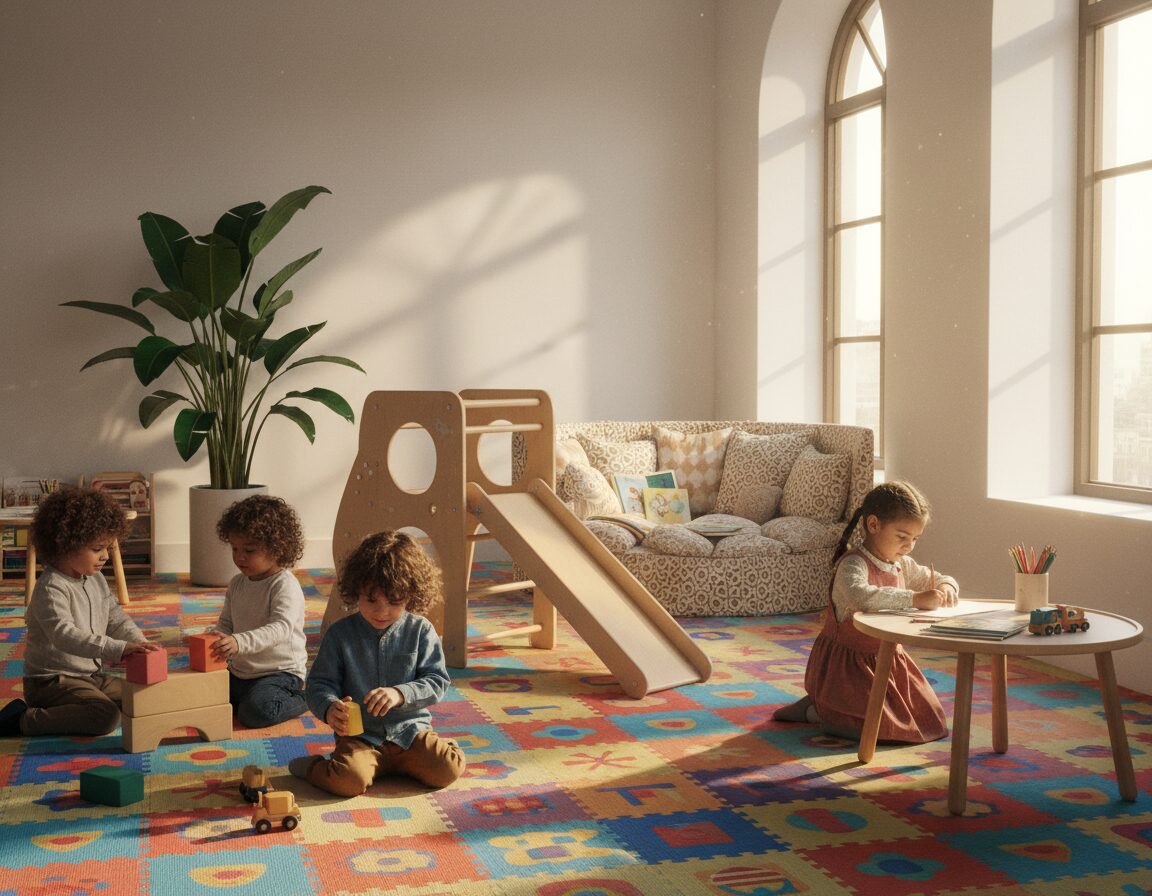
Imagine a space where every item invites curiosity and every shelf holds a new adventure. The physical environment you create is a powerful tool for nurturing your child’s development. A dedicated area signals that their exploration is valued and important.
Organizing Materials for Easy Access
Start with low, open shelves and baskets. This simple setup allows your child to see all their options and make independent choices. They can reach for wooden blocks or animal figurines without help, building confidence.
Group similar materials together in labeled bins. This helps children learn to sort and classify—key cognitive skills. A specific building zone, where creations can stay standing, invites them to return and expand their ideas.
This organized space reduces visual clutter, allowing for deeper focus. It’s not about expensive furniture, but about accessibility. You create a sanctuary for open-ended play the Montessori way, where thinking and creativity flourish safely.
How to Encourage Open Ended Play
A well-placed question or an intriguing arrangement of objects can act as a gentle spark for young minds. Your role isn’t to direct the action, but to set the stage for discovery. This subtle shift in approach can turn a quiet afternoon into a rich journey of creativity and learning.
Incorporating Provocations and Invitations
Think of a provocation as a thoughtful nudge. It’s a simple setup that invites your child to explore without telling them what to do. For example, place a few animal figurines next to a basket of pinecones and smooth stones.
See how they react. This arrangement becomes an open-ended play invitation, sparking stories about jungles or hidden treasures. The goal is to stimulate thinking, not to dictate the story’s end.
Using Simple Prompts to Spark Creativity
When a young one seems stuck, a simple prompt can work wonders. Instead of solving the problem, ask, “What would happen if we added these blocks?” This type of question encourages play and expands their ideas.
Give children time to process. They might need a moment before they start building. Your patience provides the opportunities they need to lead their own exploration.
Engage by asking open-ended questions about their creations. “Tell me about your city,” supports language and social skills. These ways of interacting help children feel supported, boosting confidence for trying new things.
Parents and educators at home can use these materials and prompts to nurture imagination. The focus remains on the child’s control, fostering essential development through self-directed play.
Incorporating Open-Ended Play in Learning Environments
The magic happens when the supportive practices you use at home are echoed and expanded upon in the classroom. Applying these enriching principles in both settings creates a consistent, powerful foundation for a child’s growth.
Strategies for Home-Based Play
Simple actions make a big difference in your house. Rotate your collection of open-ended materials like blocks and loose parts. This keeps the environment fresh and exciting for your growing child.
Set aside specific, uninterrupted time for this self-directed exploration. It gives young ones the space to follow their own ideas without rush.
As the Connetix team of master teachers highlights, this type of activity is a powerful learning tool. Your role is to ask thoughtful questions about their creations to deepen understanding.
Adapting Techniques for Classroom Settings
Educators can adapt these methods beautifully. Set up provocations that connect to lesson themes, like exploring balance or simple machines.
Provide a wide variety of toys that can be used in multiple ways. This supports the diverse learning needs of all children in your class.
When parents and teachers value this approach together, kids develop a stronger love for discovery. Consistency between settings deeply supports their creativity and overall development.
Engaging Parents and Educators in Play
The most powerful influence on a child’s play isn’t a toy—it’s the adult who shares the space with them. Your active, thoughtful presence transforms simple activities into rich learning experiences. This partnership between grown-ups and young ones is where magic truly happens.
Role Modeling and Interactive Involvement
Show your own curiosity about the world. When you delight in simple things, like the texture of a pinecone, children notice. This models a lifelong love for discovery.
Interactive involvement means listening closely. Hear the stories they tell about their blocks or toys. Your attention validates their ideas and builds language skills.
Shared games, like board puzzles, offer wonderful bonding time. Balance these structured activities with ample open-ended play opportunities. Your engagement shows children their creativity is cherished.
Facilitating Independent Exploration
Sometimes, the best thing you can do is step back. Give children the space to solve problems independently. This builds critical thinking and immense confidence.
Observe without directing. You’ll see unique ways of thinking emerge. Your quiet support allows a child to lead their own discovery.
When children support others in their play, they learn empathy. These social skills prepare them for the wider world. Parents and educators who facilitate this build connections based on mutual respect.
Addressing Challenges with Open-Ended Play
Distraction and boredom aren’t roadblocks to play; they’re often invitations to deeper engagement. When these moments arise, see them as chances to refine your approach.
Overcoming Boredom and Distraction
A child’s declaration of boredom can signal a need for a fresh challenge. Combine familiar materials like blocks with new loose parts. This sparks novel ideas.
If attention wanders, a simple prompt can refocus thinking. Ask, “What story is your creation telling?” This guides them back to their project.
Balancing Screen Time with Hands-On Learning
In our digital age, balancing screens with tangible learning is key. This type play encourages imagination over passive consumption.
Introduce hands-on games or puzzles that require active thinking. These activities help children develop fine motor skills and problem-solving abilities.
Provide a variety of things to do. This supports a smooth transition from screens to real-world exploration.
Addressing these challenges takes patience. The long-term benefits for your child’s development are immense. Remember, boredom is a natural part of childhood that often leads to the most creative breakthroughs.
Conclusion
As we wrap up, remember that the most meaningful moments in childhood often spring from the simplest sources. This guide hopes to inspire you. Embrace open-ended play as a fundamental part of your daily routine with children.
By providing simple materials and a supportive space, you help your child build confidence. The best way to support them is to follow their lead. Show them you love to watch their unique ideas grow.
Every moment spent in this play is an investment. It helps children become the creative thinkers they are meant to be. For fresh inspiration, explore open-ended sensory play ideas with wood on our blog.
Thank you for joining us. Let’s continue sharing and learning together. Your support makes a real difference in a child’s world.