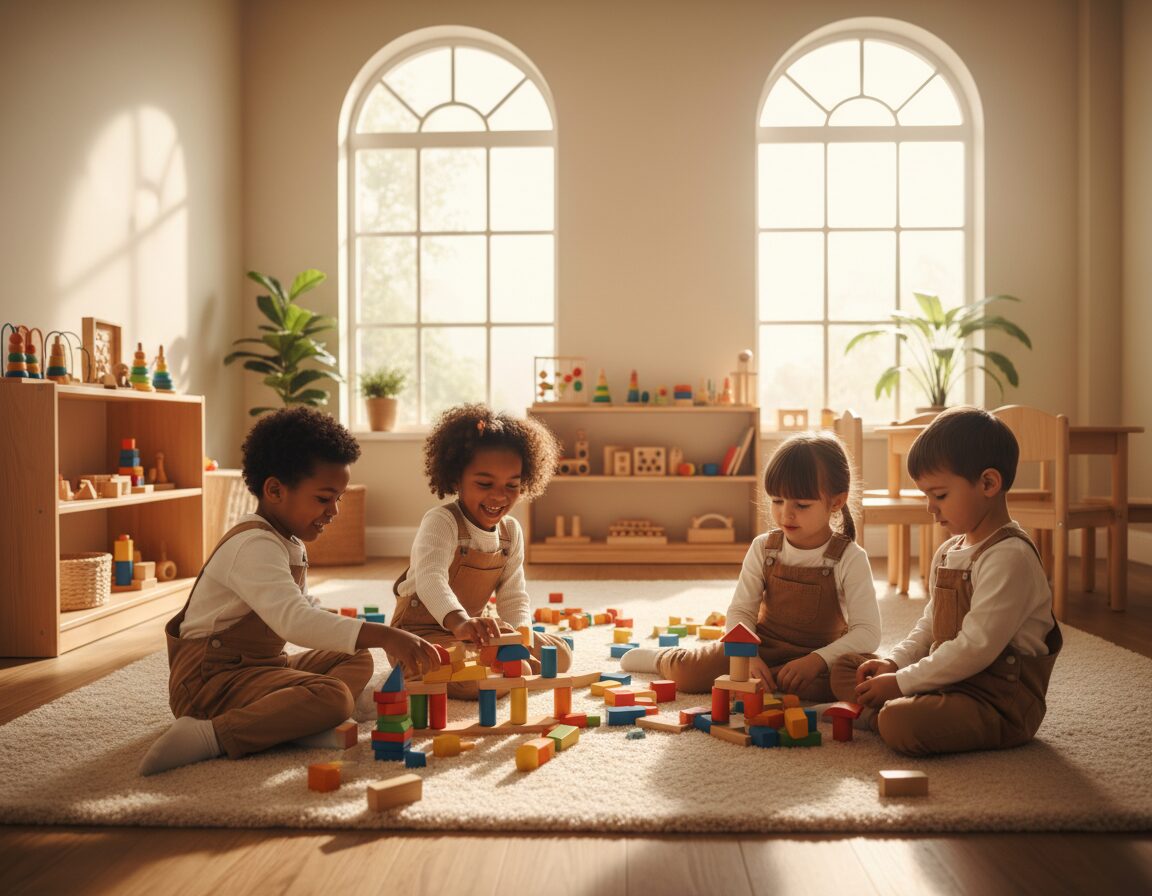
What if the simplest wooden block could teach your child more about feelings than a high-tech gadget?
This isn’t a fantasy. It’s the quiet power of purposeful, hands-on activity with natural materials. When little ones interact with these timeless treasures, they’re doing much more than having fun.
Research tells us that meaningful engagement helps kids develop essential life skills. They learn to navigate complex social situations and understand their own hearts.
By bringing wooden items into your daily routine, you offer a rich, tactile experience. This connection fosters deep cognitive and emotional growth in a way screens simply cannot.
We believe that choosing high-quality, sustainable pieces is an investment in your little one’s future. It’s a conscious choice that protects both their development and our planet.
Key Takeaways
- Wooden toys provide a unique, tactile way for children to explore their emotions.
- Purposeful activity with natural materials builds critical social and emotional skills.
- These experiences help young ones navigate complex feelings and real-world situations.
- Opting for sustainable items supports both healthy development and the environment.
- Simple, open-ended play encourages deeper thinking and problem-solving.
- Integrating these resources into daily life makes growth a natural part of the day.
- Well-made wooden items become cherished heirlooms that last for generations.
Understanding Social and Emotional Learning Through Play
Have you ever watched a child navigate a disagreement over a shared toy and seen a masterclass in human connection unfold? These everyday moments are where vital growth happens.
It’s the process of building the internal foundation for a happy, successful life.
What Is Social-Emotional Learning?
Social-emotional learning is how young people learn to manage their feelings, set positive goals, and show care for others. Think of it as the curriculum for the heart.
Expert Kathryn Hirsh-Pasek states that kids need the six C’s to thrive: collaboration, communication, content, critical thinking, creative innovation, and confidence. This framework guides healthy development.
How Play Promotes Emotional Regulation
Unstructured activity is a child’s practice field for life. Here, they experiment with responses to frustration or excitement.
This practice is called emotional regulation. It helps a child stay calm and focused during tough moments. By viewing fun as a structured opportunity, you help them build tools for lasting success.
They move from passively watching to actively shaping their own growth through meaningful engagement.
Wooden Toys as Natural Tools for Emotional Development
In a world where childhood stress is rising, could a simple wooden toy be part of the solution? A recent study found that 81% of young people say stress has negatively affected their well-being.
This is where the magic of natural resources shines. According to CASEL, kids who practice social-emotional learning regularly build stronger friendships and feel more confident.
Wooden items create a sensory-rich environment. This helps children process complex feelings in a safe, tactile way. Their hands explore while their minds make sense of big emotions.
By bringing these items into your home, you support the brain‘s ability to regulate stress. This fosters a genuine sense of calm during activity.
These timeless treasures act as a bridge for social-emotional learning. They help kids connect their inner world with the physical one through simple, open-ended play.
This connection is vital for healthy development. It turns everyday moments into opportunities for growth, resilience, and joy.
Unique Play Based Emotional Learning Tools
Imagine a toy box filled with items that don’t just entertain, but actively build your child’s inner resilience. These are the special resources that turn everyday fun into a foundation for life.
They are open-ended, inviting imagination. A simple set becomes a world where your little one practices patience and joy.
Benefits of Wood Over Plastic in Learning
Natural materials make a real difference. Wood offers a warm, solid feel that plastic simply can’t match.
This tactile quality is grounding. It helps kids focus their attention during important activities. A wooden item is also more durable, often becoming a cherished heirloom.
You’re choosing sustainability and a richer sensory experience. This supports calm, focused engagement where true growth happens.
Selecting the Right Toys for Your Child
Look for items that encourage creativity and problem-solving. The versatile PunkinPlaySpace set is a perfect example.
It includes one play space, six colorful pitch balls, and a storage pack. This design promotes motor planning and helps with emotional regulation skills.
By investing in high-quality, wooden tools, you create a lasting environment for exploration. Your child can learn and grow through years of meaningful engagement.
Actionable Play and Movement Activities
Ever feel like your child’s energy levels swing from serene to stormy in a heartbeat? You’re not alone. Simple, movement-based activities can help them understand and manage these shifts right at home. These actionable ideas turn daily moments into powerful chances for growth.
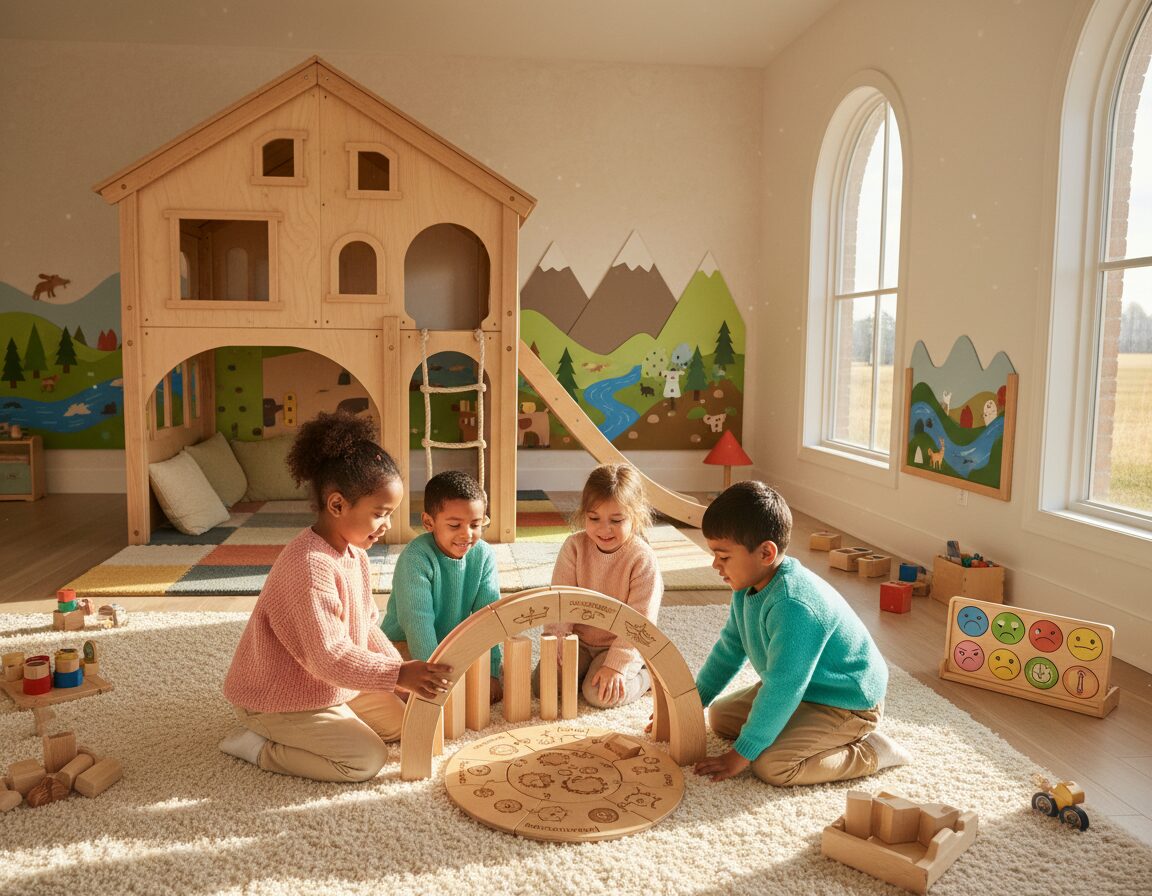
Energy Thermometer Game for Self-Awareness
Try the Energy Thermometer game. Use a starfish to represent calm and a tornado for high energy. This engaging activity helps children identify their own energy levels. They learn to recognize when they need calming skills.
Observational Play on the Playground
Next time you visit the playground, encourage observational play. Ask your child to watch how others interact. This practice helps them notice social cues. It allows them to adjust their behavior accordingly.
Integrating Brain Breaks into Daily Routines
Short brain breaks are a game-changer. Integrate them into your daily routine at home. These quick pauses refresh attention and boost emotions regulation. They help kids manage big feelings effectively.
These simple activities and games are low-tech and easy to implement. By focusing on movement, you help your child build the self-awareness they need to succeed every day.
Enhancing Cognitive and Social Skills Through Play
Did you know that a simple game of hopscotch can sharpen your child’s mind and heart at the same time? Structured fun is a powerful teacher. Research from CASEL indicates that students in social-emotional learning programs score about 11 percentile points higher academically.
These moments build a strong foundation for life.
Building Critical Thinking through Fun Activities
Incorporate math facts into movement-based games. This helps children improve cognitive skills while actively taking turns. They must solve problems and plan their next move.
This practice focuses the mind and strengthens the brain. It turns a lively activity into a critical thinking workout.
Improving Empathy and Teamwork in Group Games
Group games provide a perfect chance for kids to build empathy. They learn to listen and share. Using their words to express feelings is key.
This is how they develop the social skills needed for lasting friendships. Managing behavior during these activities leads to better outcomes for everyone.
Sustainable Play Strategies for Home and Classroom
Transforming everyday spaces into zones for growth doesn’t require fancy equipment—just intention. Sustainable fun means using what you have to create lasting lessons.
These low-tech approaches reduce waste and focus on the child’s experience. They work equally well in your living room or a school setting.
DIY Low-Tech Games and Activity Ideas
We’ve curated 15 social-emotional learning games that help kids practice empathy and self-control. These activities feel natural and fun, not like a lesson.
Simple DIY ideas include:
- Feelings Wheel: Craft one from paper plates. It helps children name emotions and builds their emotional vocabulary.
- Kindness Bingo: Use recycled paper for cards. This game encourages students to notice and celebrate positive behavior.
- Simon Says with a Twist: Add commands for calm breathing. This gives kids a chance to practice impulse control and emotional regulation.
Many of these activities require taking turns, which naturally builds social skills. These learning games are designed to help kids build essential social-emotional skills.
By integrating these ideas, you create a supportive environment. Children can express their feelings and interact positively with others.
Incorporating Movement to Boost Learning
Science confirms that getting kids moving isn’t just for recess—it’s essential for how their brains learn. This connection between physical action and mental growth is powerful and backed by research.
The Science Behind Movement and Cognitive Processing
Author Eric Jensen explains in Teaching with the Brain in Mind that simple actions can raise a child’s heart rate significantly in seconds. This physiological shift prepares the nervous system for complex tasks.
Studies show that voluntary exercise influences gene expression to improve memory. Movement literally helps rewire the young mind for better absorption of information.
When you add short bursts of action into the day, you help kids reset their focus. This is especially useful in a busy classroom where students need to manage their energy.
Games like Simon Says, when designed for motion, prepare the brain for academic success. They turn a fun activity into a cognitive warm-up, supporting lasting growth.
Practical Tips for Parents and Educators
Creating a space where children thrive emotionally starts with a few intentional choices. Whether you’re at home or in a classroom, your daily environment sets the stage for essential growth.
Look at places like Bina. Their educators weave connection into every lesson. They teach students to listen, empathize, and collaborate as part of the everyday process.
Creating an Engaging Play Environment
Your goal is to build a setting that feels safe and inviting. This encourages kids to explore their feelings and interact positively with others.
Start with these simple, effective strategies:
- Set Aside Dedicated Time: Carve out regular moments for open-ended exploration. This unstructured time allows your child to process emotions through creative activities.
- Choose Tools That Build Connection: Select resources that naturally encourage sharing and taking turns. These items help children develop the social skills needed for kind interaction.
- Model the Behavior You Want to See: Use your own words and actions to demonstrate patience and focus. This consistent modeling teaches kids how to manage their attention and make thoughtful choices.
By focusing on these elements, you help children build lasting confidence. They learn to navigate social situations and express themselves clearly.
This approach turns any space into a powerful zone for learning and connection. It supports the vital skills every child needs to succeed.
Conclusion
As we wrap up, remember that the most powerful lessons often come from the simplest moments. We hope this guide has given you practical skills and ideas to support your child‘s growth through meaningful play.
Every moment spent in play is a chance for kids to explore their emotions and feelings. They build social skills that last a lifetime. By choosing sustainable wooden items and adding movement, you create a nurturing space where your child can thrive with others.
We encourage you to keep exploring these games. They help your child build a strong foundation for learning and future success. Thank you for joining us on this journey to make learning a joyful experience for every child in your care.