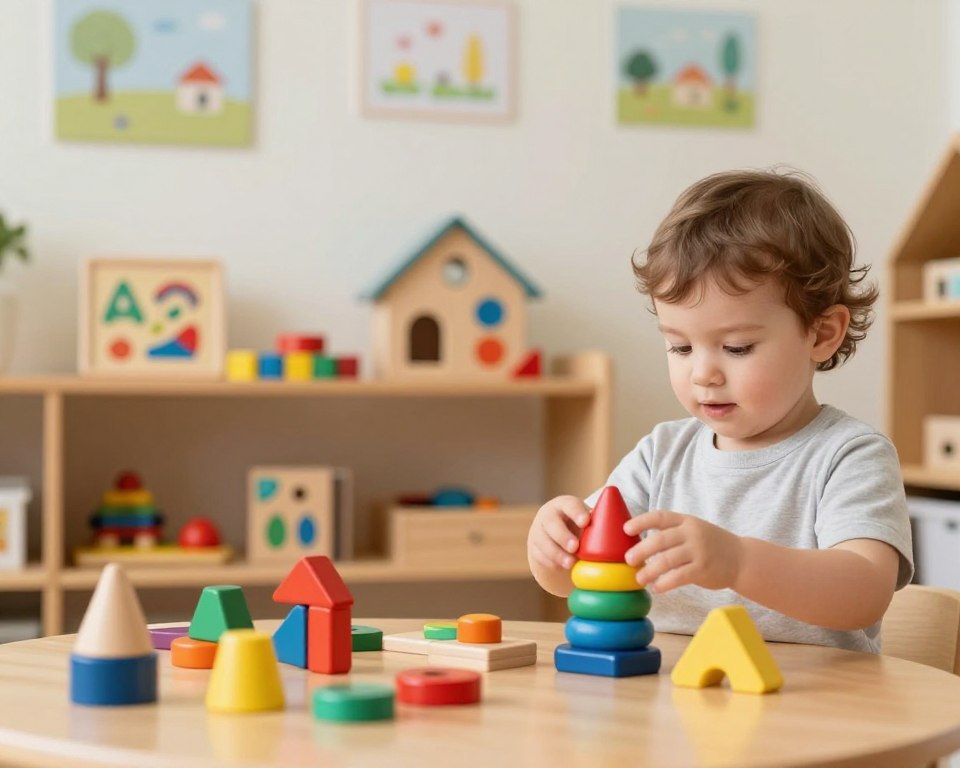
What if the simplest plaything could unlock your little one’s greatest potential? Picture your child, completely absorbed, turning a wooden bowl over and over—their focus is pure magic.
These moments are more than just cute. They’re the building blocks of development. The right tools honor your child’s natural curiosity and timeline.
We know it’s overwhelming. The toy aisle is a jungle of flashing lights and noisy gadgets. It’s hard to know what truly serves your young one’s needs.
This guide cuts through the noise. You’ll learn to navigate with confidence, whether you’re investing in beautifully crafted wooden pieces or creating rich experiences with items from home.
Meaningful play doesn’t demand a huge budget or a perfect playroom. It asks for observation, respect, and a deep understanding of how children learn.
You’ll discover both store-bought and DIY alternatives, practical life activities, and age-appropriate suggestions that grow with your child from their first steps into the preschool years.
Key Takeaways
- The best playthings support your child’s natural developmental journey.
- Simple, open-ended materials often foster deeper concentration and creativity.
- You don’t need to buy expensive items to create a rich learning environment.
- Observing your child at play is the best guide for choosing suitable materials.
- Play is the primary work of early childhood and essential for all areas of growth.
- Thoughtfully selected tools can build independence, coordination, and problem-solving skills.
Introduction: A Buyer’s Guide to Montessori Toddler Toys
Ever wondered what separates a truly enriching plaything from one that’s just clutter? This guide is your compass. It will help you choose materials that serve your young one’s growth, not just fill space.
Understanding the Montessori Approach
At its heart, this method is about purposeful play. It respects your child’s natural timeline. The best materials are simple and made from natural substances like wood or fabric.
They allow a young one to practice one skill at a time. This builds deep concentration. It taps into their innate drive to explore and learn.
You are not just buying playthings. You are investing in tools that foster independence and a love for discovery. The approach values quality over quantity.
Thoughtfully selected items support development. They do not overstimulate with lights or noises. This philosophy is accessible for every family and budget.
Understanding this empowers you. You can look at any material and ask: does it serve my child’s growth? Your choices become intentional and meaningful.
Exploring Montessori Philosophy for Child Development
What does it mean to truly support your young one’s innate desire to make sense of their world? This philosophy centers on deep respect for a child’s natural learning journey.
Benefits of Purposeful, Child-Led Play
When children direct their own play, they follow their deepest interests. This builds intrinsic motivation and a powerful sense of capability.
Your two-year-old is actively sorting their world into categories. Allowing them to explore this drive builds critical thinking. It turns simple moments into profound growth.
This approach nurtures independence. Your child gains confidence by solving problems their own way. They learn to trust their instincts and focus deeply.
Natural Materials and Simple Designs
Materials like solid wood, brushed metal, and soft cotton provide rich sensory feedback. They feel substantial and warm in small hands.
These items connect your child to the natural world. Simple wooden toys invite endless imagination. Without batteries or screens, your child’s mind creates the story.
This simplicity is far from boring. It builds neural pathways through active creativity. Well-chosen pieces become cherished companions for years.
Essential Montessori Toddler Toy Ideas for Growth
The most powerful learning tools are often the ones that challenge little hands and minds. The right materials build the foundational abilities your child needs for growing independence.
Toys That Enhance Fine Motor Skills
Fine motor abilities are the foundation for future writing and self-care. A Drop & Match Dot Catcher lets young ones sort colored dots, building these skills and deep concentration.
Beloved items like a coin box invite problem-solving. Your child works to fit coins through a slot and later unlocks it with a key.
Threading activities with a wooden guide strengthen the pincer grasp. Peg boards and puzzles with large knobs refine their hold and build essential hand strength.
Encouraging Hand-Eye Coordination and Practical Life Skills
These skills translate directly to real-world capability. A Match & Tap Hammer Box shows cause and effect. Each strike improves hand-eye coordination and focus.
The Every Which Weigh Scale & Pails taps into a young learner’s curiosity about tools. It introduces concepts of balance and weight through play.
Classics like a Wooden Counting Box link symbols to amounts. A Russian doll builds spatial reasoning. These aren’t just playthings—they are working tools for a capable, confident child.
Innovative DIY Montessori Toy Creations
The best tools for growth aren’t always found in a store—they’re often waiting to be created at home. You can craft high-quality learning materials using everyday items and recyclables. This approach is both budget-friendly and deeply personal.
Homemade Projects: Geoboards and Spindle Boxes
Make a geoboard from a sturdy cardboard box. Cut straws and secure them with glue to create pegs. Your child uses rubber bands to explore shapes and symmetry.
This activity builds the three-finger grip essential for writing. It also introduces early math concepts through hands-on manipulation.
A spindle box for counting is another great project. Use milk cartons and popsicle sticks. Write numerals on compartments for a self-correcting experience.
Budget-Friendly, Recyclable Alternatives
Your house is full of potential. Try these simple setups that cost almost nothing.
- Threading: Use a colander and shoelaces or penne pasta on pipe cleaners.
- Hammering: An empty egg carton with real nails builds coordination and arm strength.
- Sorting: Group items by color using pom poms or by size with measuring cups.
- Salt Tray: A shoebox lid with salt lets little hands practice writing letters.
These creations can be tailored to your child’s specific interests. That makes them even more valuable than generic options.
Montessori-Inspired Outdoor and Musical Activities
Imagine your little one, completely absorbed in the simple rhythm of shaking a maraca or jumping in a pile of leaves. These experiences are magical and fundamental to growth.
They connect two powerful worlds: the boundless outdoors and the joyful realm of sound.
Using Play to Connect with Nature
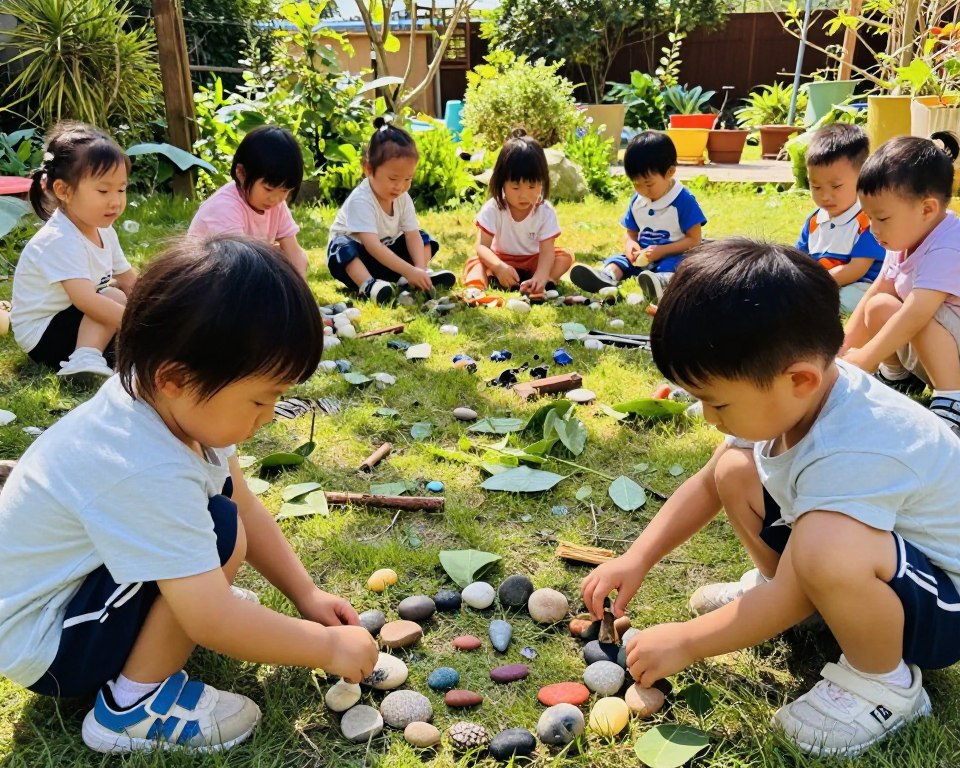
Some of the best Montessori-inspired play happens outside. Free exploration like collecting leaves or visiting a beach provides rich sensory input.
It builds gross motor skills and a deep connection to the natural world. No indoor item can replicate this.
The Role of Music and Movement in Learning
Musical activities support pattern recognition and emotional expression. Offer a variety of instruments to bang and shake.
A quality Music Set with Pentatonic Pat Bells builds a genuine love for sound. Tap two shakers together to develop rhythm.
Use words like “lower” and “higher” as your child plays. Sing favorite songs at different tempos set by an Animal Metronome.
These activities cost little but offer immense benefits. They are accessible to all families and spark lasting interest.
Practical Life Skills Through Play and Activity
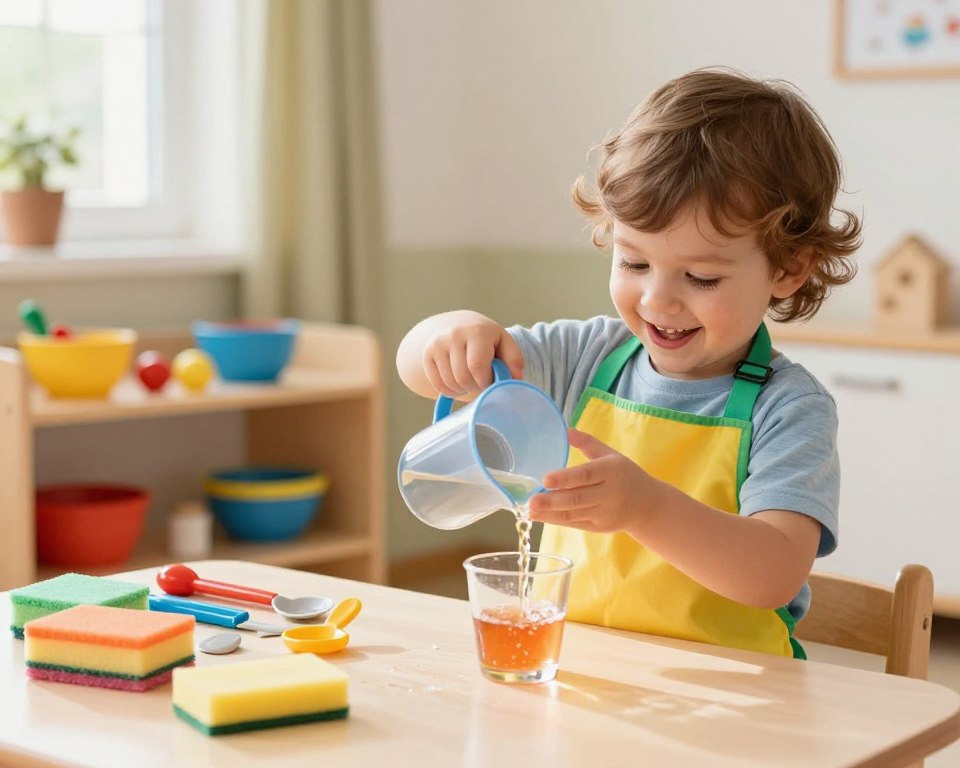
True capability isn’t learned from a screen—it’s built by doing real work alongside you. These activities are at the heart of a nurturing philosophy. They give young ones genuine work that contributes to the home.
This isn’t pretend play. It’s actual life skills using real, child-sized tools. A small dustpan and brush let them sweep up messes. A little watering can encourages care for plants.
Building Independence with Simple Tasks
Tools like a Squeaky Clean Squeegee Set build two-handed coordination. Squatting and reaching strengthen important muscles.
A Placemat shows where to put a plate, cup, and utensils. This builds order. A Real Life Play Kitchen lets a two-year-old practice real kitchen skills.
You can create homemade solutions, too. A cleaning caddy with a squeeze bottle and sponge lets a child manage spills. Shorten a swiffer to their height.
Invite your little one to help with real chores. Ask, “Would you like to help me clean this window?” This work builds far more than task completion.
- Deep concentration and focus
- A sense of order and sequence
- Genuine independence and self-confidence
- A powerful feeling of belonging in the family
Tips for Choosing the Best Montessori Toys at Home
The secret to selecting enriching playthings lies in understanding both quality and developmental timing. Your choices build a foundation for independent learning and joyful discovery.
Evaluating Quality, Safety, and Natural Materials
Seek out well-constructed items made from solid wood, metal, or natural fibers. These materials provide authentic sensory feedback and last for years.
Safety is paramount. Ensure finishes are non-toxic and avoid small parts for young children. Brands like Schleich create beautifully detailed animals that withstand intense play.
Adapting Toys to Your Child’s Developmental Stage
Watch your little one’s current skills and interest. Offer materials that provide just the right challenge.
For a baby under three months, a black-and-white mobile encourages focus. Between three and twelve months, grasping rings and soft balls support rolling.
Between twelve and twenty-four months, introduce a simple coin box or peg board. A preschooler might love a water-painting board.
The best gift is your observation. Meet your child exactly where they are.
Conclusion
In the end, the most valuable tool you offer isn’t a thing—it’s your presence and understanding. Choosing materials for your little one is about honoring their natural development and supporting their journey toward independence.
Your thoughtful observation matters more than any specific item. Whether you invest in beautiful wooden Montessori toys or create meaningful play with household objects, intention is key.
This approach is accessible to all families. Trust your instincts—you know your toddler‘s interests and stage. These materials are simply tools; the real magic is in your relationship with your child.
Start small, observe carefully, and enjoy watching their capabilities blossom. Embrace these ideas in daily life to create a home filled with order, respect, and love. The greatest gift you can give is an environment where they feel capable and cherished.