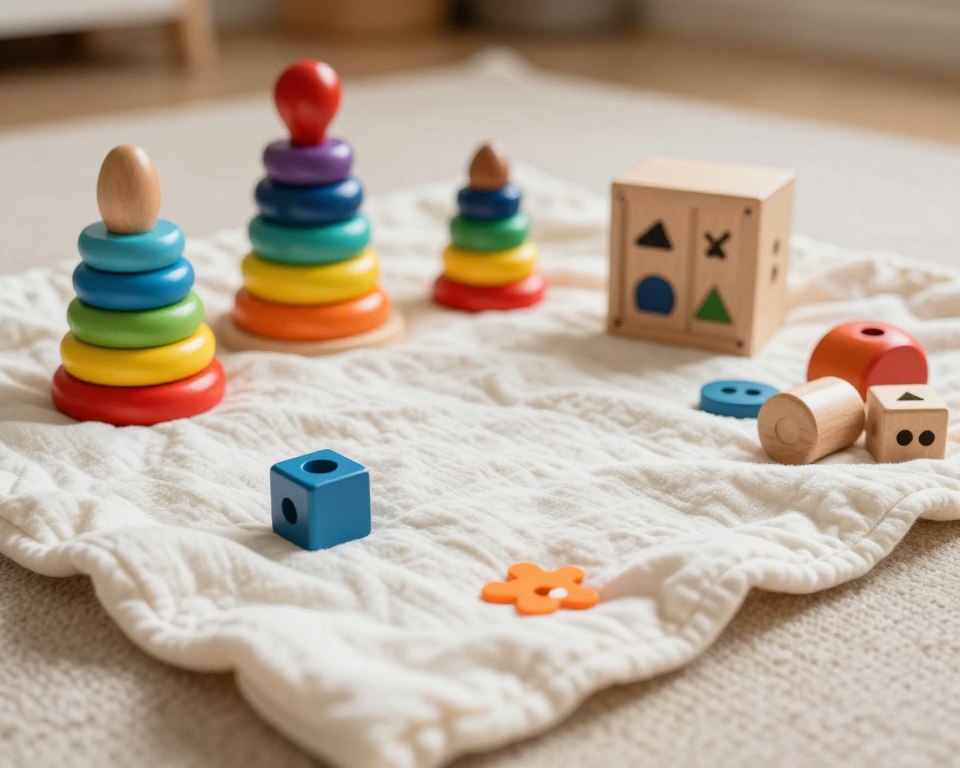
What if the simple act of play could build your little one’s confidence, curiosity, and independence?
Welcome! We know you’re searching for more than just something to keep your child busy. You want meaningful items that nurture their natural drive to explore and grow.
This guide focuses on thoughtfully designed tools that support learning through hands-on discovery. These are not about flashy lights or noise. They are about respecting a child’s innate desire to master new skills at their own pace.
We’ll help you navigate this world. You’ll learn how to select pieces that align with your child’s unique developmental stage and interests.
Every child grows differently. Observation is your best guide to knowing what will truly resonate. Investing in quality means choosing items that offer lasting value and support multiple milestones.
Let’s explore how simple, beautiful objects made from natural materials can create magical moments of discovery during these precious early years.
Key Takeaways
- Meaningful play items nurture a child’s natural curiosity and support key developmental milestones.
- These tools are designed for hands-on exploration and independence, not passive entertainment.
- Selecting the right pieces involves observing your child’s unique interests and growth stage.
- High-quality, natural materials offer lasting value and can support learning over time.
- This guide provides practical insights on budget, safety, and age-appropriate choices.
- The focus is on child-led play that builds confidence and foundational skills.
- Simple, beautiful designs can create cherished moments of discovery and connection.
Understanding Montessori Toys for Babies
The difference between a toy that merely entertains and one that truly teaches lies in its design and purpose. These special items are built for active, hands-on exploration.
What Defines a Montessori Toy
A true Montessori toy promotes deep engagement. It serves a clear learning purpose rather than just offering distraction. You won’t find batteries, flashing lights, or loud electronic sounds here.
Instead, these playthings invite your youngster to be the active participant. Many enthusiasts even call them “activities.” This highlights that they are something your little one does, not just watches.
They focus on one skill or concept at a time. This allows for full concentration. It prevents a young mind from feeling overwhelmed.
The Importance of Engagement Over Distraction
Choosing engagement means supporting your child’s natural curiosity. True learning happens during active problem-solving. It comes from discovering cause-and-effect through personal effort.
These simple, beautiful objects are designed to inspire exploration at a unique pace. They respect an individual developmental timeline. Despite their simplicity, they can captivate attention for extended periods.
You are giving the gift of deep, meaningful play. This builds concentration, confidence, and genuine skill development that lasts.
The Philosophy Behind Montessori Baby Toy Essentials
At the heart of meaningful play lies a profound respect for a child’s innate ability to guide their own discovery. This idea is the cornerstone of the Montessori Method, a time-tested educational philosophy started by Italian physician Maria Montessori over a century ago. Its principles remain deeply relevant for parents today.
Core Principles of Montessori Education
The core philosophy centers on seeing your little one as a unique individual. It honors their personal timeline, interests, and natural drive to learn about the world around them.
This approach emphasizes play-based, child-led learning. It values your youngster’s independence and curiosity over adult-directed instruction. You learn to trust your child as the guide of their own journey.
Parents and caregivers become thoughtful observers. We prepare enriching environments that support hands-on exploration. Real-life experiences are valued over passive entertainment.
This view extends into everyday life at home. Simple, purposeful items become tools for meaningful development and discovery. Your child is seen as a capable, competent learner from the very beginning.
Embracing these ideas fosters confidence, independence, and a lifelong love of exploration. You give a foundation for becoming a curious, self-motivated person who approaches the world with wonder.
Age-Appropriate Montessori Toys and Activities
Think of these age-based suggestions as a helpful map, but remember your child is the unique explorer charting their own course. These are flexible guidelines. Your observation is the best tool for knowing what they’re truly ready for.
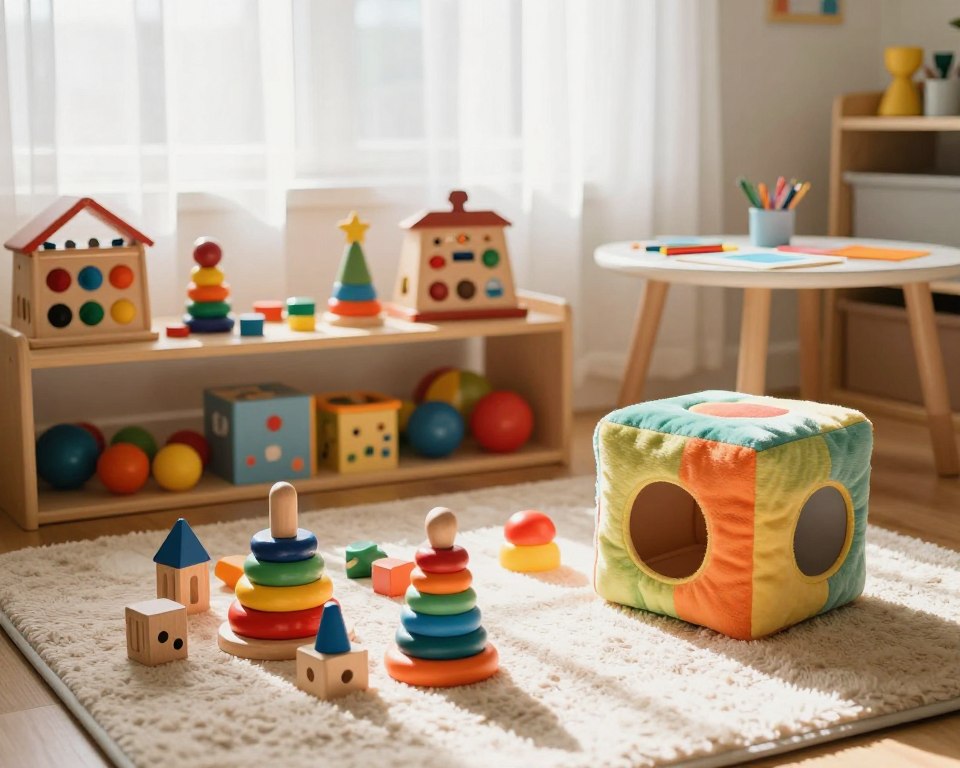
0+ Month – Stimulating Early Senses
Newborns are taking in the world. High-contrast black and white books support their developing vision and help strengthen optic nerves.
Simple play gyms encourage reaching and kicking. This builds early connections between sight and movement.
- Wooden rattles teach visual tracking and develop the grasp reflex.
- Soft, textured balls make tummy time more playful and encourage transferring objects between hands.
6+ Month – Encouraging Motor Development
Around six months, exploration becomes more active. Textured sensory balls invite discovery through touch.
The beloved object permanence box teaches a key cognitive concept. A baby-safe mirror can captivate your crawling little one, extending tummy time while fostering self-awareness.
12+ and 18+ Months – Advancing Fine and Gross Motor Skills
Your newly walking toddler is ready for new challenges. Vertical stackers and simple wooden puzzles refine fine motor control and problem-solving.
Push and pull toys support coordination and balance. Realistic animal figurines spark language explosions.
Safe climbing structures let your active child safely test their physical capabilities. The right item at the right time creates moments of deeply focused, joyful play.
Key Skills Developed Through Montessori Play
Development isn’t a checklist; it’s a beautiful, interconnected web of abilities that grow through play. Each carefully chosen item supports multiple areas of your little one’s growth simultaneously.
Fine Motor and Hand-Eye Coordination
Those tiny hands are building the foundation for a lifetime of skills. Activities like wooden stackers and threading beads strengthen small muscles. They teach the precision needed for future tasks like writing and buttoning.
Hand-eye coordination blossoms through simple acts. Reaching for a rattle, transferring a ball between hands, and fitting a puzzle piece all require focused coordination. This is how your child learns to connect what they see with what they do.
Understanding Object Permanence and Problem-Solving
A magical “aha” moment occurs between 6 and 9 months. This is when the concept of object permanence clicks. Using a classic object permanence box, your child learns that things still exist even when out of sight.
Problem-solving abilities grow from there. Figuring out how to rotate a puzzle piece or sort a shape builds cognitive development. Milestones like the pincer grasp emerge, paving the way for self-feeding and drawing.
Every playful exploration builds gross motor strength, balance, and confident thinking. It’s layered learning at its best.
Best Montessori Baby Toy Essentials for Early Learning
Choosing the right tools for your little one’s journey can feel overwhelming, but some items stand out as timeless treasures. This curated collection focuses on the best Montessori toys that have proven their worth in supporting development across multiple stages.
Top Picks to Enhance Development
Start with foundational pieces for newborns. High-contrast black and white books captivate young eyes, while a simple play gym with hanging elements invites reaching and grasping.
Wooden rattles feel substantial in tiny hands, teaching early cause-and-effect. Soft sensory ball sets made from natural rubber grow with your child, perfect for grasping and rolling games.
The iconic object permanence box is a staple. It fascinates little ones as they learn that hidden items still exist. A baby-safe mirror extends tummy time and fosters self-awareness.
For advancing skills, introduce simple wooden puzzle options with easy-grasp knobs. Vertical stackers remain engaging for years, refining fine motor control.
Consider larger investments like climbing structures for active play. The enduring appeal of wooden materials offers warmth, durability, and a natural connection to the world.
Natural Materials Versus Synthetic: Making the Right Choice
A common belief is that all educational playthings must be crafted from wood, but the truth is more nuanced. The core principles of engagement and simplicity matter most.
Benefits of Wooden and Natural Material Toys
Dr. Maria Montessori advocated for attractive natural materials. She believed they connect children to the real world and provide authentic sensory experiences.
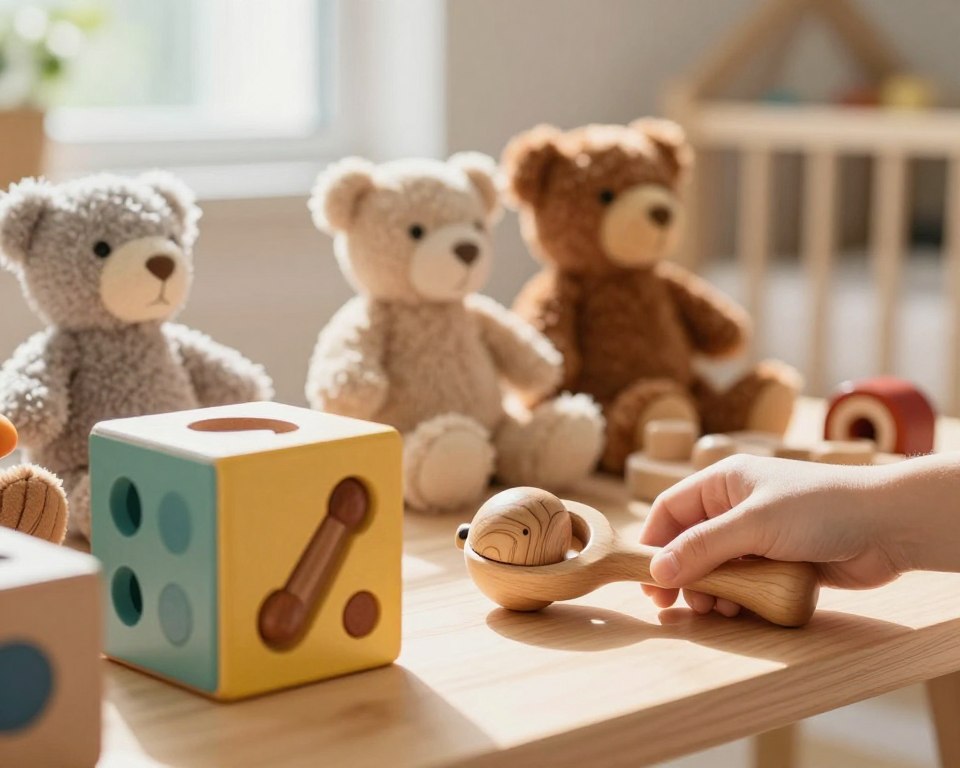
Wooden items offer distinct advantages. They feel substantial in small hands, with a natural warmth and texture. Their timeless beauty and durability mean they often hold value for years.
It’s true that wood typically costs more than plastic. This investment pays off in longevity, often supporting multiple children.
Natural materials extend beyond wood. Think of cotton, silk, natural rubber, and wool. Each offers unique textures for sensory exploration.
You can build a wonderful collection without an all-wooden mandate. A mix of materials provides rich variety. Prioritize items that invite deep, focused play.
How to Choose Toys That Encourage Independent Learning
The secret to fostering true independence isn’t in teaching, but in knowing when to step back and observe.
Observational Tips and Child-Led Play Techniques
Your most powerful tool is quiet observation. Watch what naturally captures your child’s focus during daily moments.
Are they fascinated by opening containers? Drawn to musical sounds? Constantly trying to climb? These cues reveal the skills they’re eager to master.
Use these insights to select toys that support their current developmental focus. Introduce new items simply by placing them on a low shelf.
Allow your little one to discover and explore freely. Resist showing the “correct” way. True learning happens through personal problem-solving.
If an item is ignored, it’s not a failure. Your child may not be ready yet. Reintroduce it in a few weeks.
This approach to play builds confidence and autonomy. Remember, simply watching is profoundly important. You’re honoring their journey.
Creative Ways to Engage with Montessori Toys During Playtime
Imagine turning everyday moments into joyful learning adventures with your baby. While independent play is valuable, your warm interaction is equally powerful.
Interactive Play Ideas for Parents and Babies
Start with simple ball play. Slowly roll a high-contrast ball across your newborn’s view to practice eye tracking. During tummy time, place a textured ball just within reach to encourage stretching and grasping.
Make music together with rattles. Create a fun rhythm—shake, shake, pause—and watch your little one’s reaction. This helps them distinguish sound patterns and learn cause-and-effect.
For puzzle play, model how pieces fit while narrating your actions. Let your child explore pieces by mouthing and banging them first. Personalize the activity by slipping a family photo into a puzzle frame.
Introduce drinking from an open cup with tiny amounts of water at meals. Show them how it’s done and embrace the spills as part of the learning process.
Rotate items in a treasure basket weekly by theme. One week, gather all round objects. The next, focus on things that jingle. This keeps exploration fresh and purposeful.
Demonstrate how an object permanence box works before letting your baby try independently. Say, “Look, it’s gone!” and then, “There it is!” This shared surprise builds understanding.
Use realistic animal figurines for language games. Start by naming each one. Later, ask, “Where is the cow?” and celebrate when they point to it.
Remember, interactive play isn’t about directing. It’s about being present, modeling possibilities, and delighting in each new discovery together.
Expert Tips on Rotating and Organizing Montessori Toys
Ever feel like your living room is a sea of scattered playthings, yet your child seems bored with all of them? A simple rotation strategy can change everything. It keeps your little one engaged and prevents overstimulation.
Here’s the magic: having fewer options visible actually increases focused play. Aim for 6-8 carefully chosen items on a low shelf. This curated set invites deeper exploration than a crowded playroom.
Rotation offers practical benefits for you too. Cleaning becomes easier with less clutter. You can clearly observe which toys truly captivate your child’s imagination.
Set up a simple system. Keep active toys accessible. Store others in labeled bins, rotating every few weeks based on interest.
Watch for cues to rotate. Your child might ignore certain pieces or master their challenges. They may seem restless with current options.
Remember, rotated items aren’t gone forever. Reintroduce a puzzle after several weeks. It will feel brand new as skills have grown.
Organize stored toys by category like fine motor or sensory. This makes selecting the next set simple. You don’t need to swap everything at once—sometimes refreshing just 2-3 pieces renews the whole environment.
This process reveals which items earn their place. You’ll learn what sparks joy and supports development. That’s valuable knowledge for building your perfect collection.
Practical Considerations When Purchasing Montessori Toys
Let’s talk honestly about the investment in your child’s playthings—it’s about value, not just price.
Start with a few foundational pieces. A simple wooden puzzle or a stacking set offers more value than a closet full of distractions.
Quality items hold their worth. They often last for multiple children and maintain resale value.
Budget, Safety, and Durability Aspects
Safety is non-negotiable. Always check age labels and avoid small parts for young ones.
Look for non-toxic finishes. Ensure wooden surfaces are smooth, without splinters.
Durability matters. Natural materials typically outlast plastic, making the higher cost reasonable over time.
Guidelines for Selecting the Right Toys Based on Age and Interest
Match items to developmental stages. A large rattle suits a young infant’s grasp. A shape sorting box fits a toddler’s problem-solving focus.
Observe your child’s daily fascinations. Do they love opening things? A sliding object makes sense.
Ensure variety. Include different colors and textures to support sensory and coordination skills.
Choose pieces that allow open-ended exploration. The best toys grow with your baby and spark genuine curiosity.
Conclusion
Your journey into thoughtful play is a beautiful act of trust in your child’s incredible potential.
Remember, the core Montessori principles are about intentionality and observation. It’s not about perfection or having every item. It’s about respecting your little one as a capable, curious learner from the start.
Trust the cues they give you. Start with a few key pieces and build your collection slowly. Every small step you take supports their support sensory development, concentration, and growing independence.
You are fully equipped to make choices that serve your family beautifully. The greatest gift is providing simple, beautiful tools for discovery.
These tools say, “I trust you to explore this wonderful world at your own perfect pace.” That trust nurtures a lifelong love of learning and wonder.