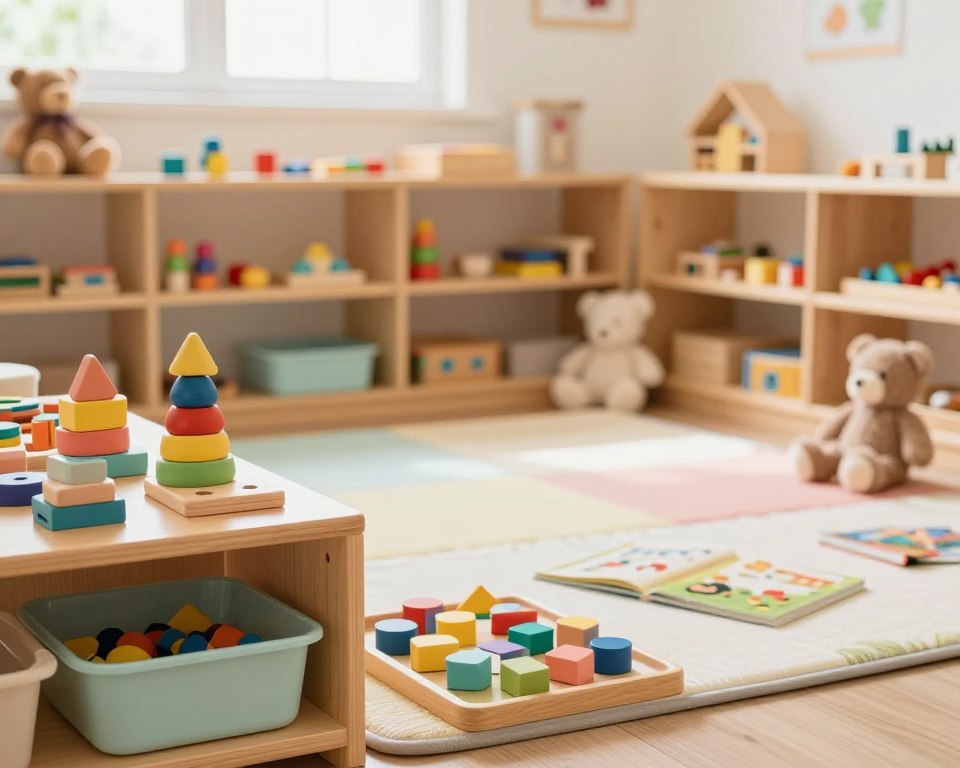
What if the secret to calmer, more focused playtime wasn’t about buying more things, but about how you present the ones you already have?
If you’re tired of tripping over a sea of playthings, you’re not alone. Many families feel overwhelmed by clutter in their living space. It can make your home feel chaotic instead of peaceful.
There’s a transformative approach to this common struggle. It focuses on creating a simple, accessible setup for your little one. A thoughtfully arranged shelf is at the heart of it.
This method respects your child’s natural desire to explore and learn. It fosters independence, concentration, and deeper engagement during play. The goal is meaningful experiences, not just keeping things tidy.
This guide walks you through practical, budget-friendly ideas that work in real homes. You’ll learn that an effective setup isn’t about expensive materials or a huge space. Small, thoughtful changes can make a remarkable difference in how your young one engages.
Key Takeaways
- This approach transforms play by fostering your child’s independence and focus.
- A calm, organized space reduces overwhelm for both you and your little one.
- Effective setup is about thoughtful presentation, not the number of items.
- You can create this environment on any budget and in any size of home.
- Rotating playthings on a shelf keeps interest high and clutter low.
- The goal is to support your child’s natural development through accessible choices.
- Small changes in how you organize can lead to more peaceful and engaged play.
The Montessori Approach to Organized Play
It all starts with a fundamental belief in your child’s capability when the world around them is set up for success. This philosophy trusts that young ones are naturally curious and driven to learn. Our role is to prepare an environment that supports this innate desire.
Understanding the Montessori Philosophy
Dr. Maria Montessori discovered that a thoughtfully arranged space respects a child’s developmental needs. It honors their growing sense of order. Toddlers, especially, thrive on predictability as they navigate a world full of new experiences.
When items have a consistent place, the room feels calm instead of chaotic. This allows your little one to focus more deeply. They feel a greater sense of control and security in their own environment.
Benefits of an Organized Playroom
This setup leads to real, meaningful outcomes. You’ll notice improved concentration and stronger decision-making skills. The satisfaction your child gets from completing an activity builds confidence.
An organized room reduces overwhelm for everyone. With fewer options displayed, your young one can see their choices clearly. This encourages intentional, engaged play.
The benefits extend far beyond childhood. Learning to care for items and return them builds essential life skills. It’s about creating a peaceful space that works with your child’s natural tendencies.
- Deeper Focus: Fewer distractions mean longer, more meaningful play.
- Growing Independence: Accessible choices empower your child to select and use activities on their own.
- Lasting Skills: The habits of order and care learned here serve them for years to come.
Montessori Toy Shelf Ideas: Designing Your Perfect Shelf
Creating an environment that fosters independence starts with two simple design principles. Your child must reach everything easily and see all their options at a glance.
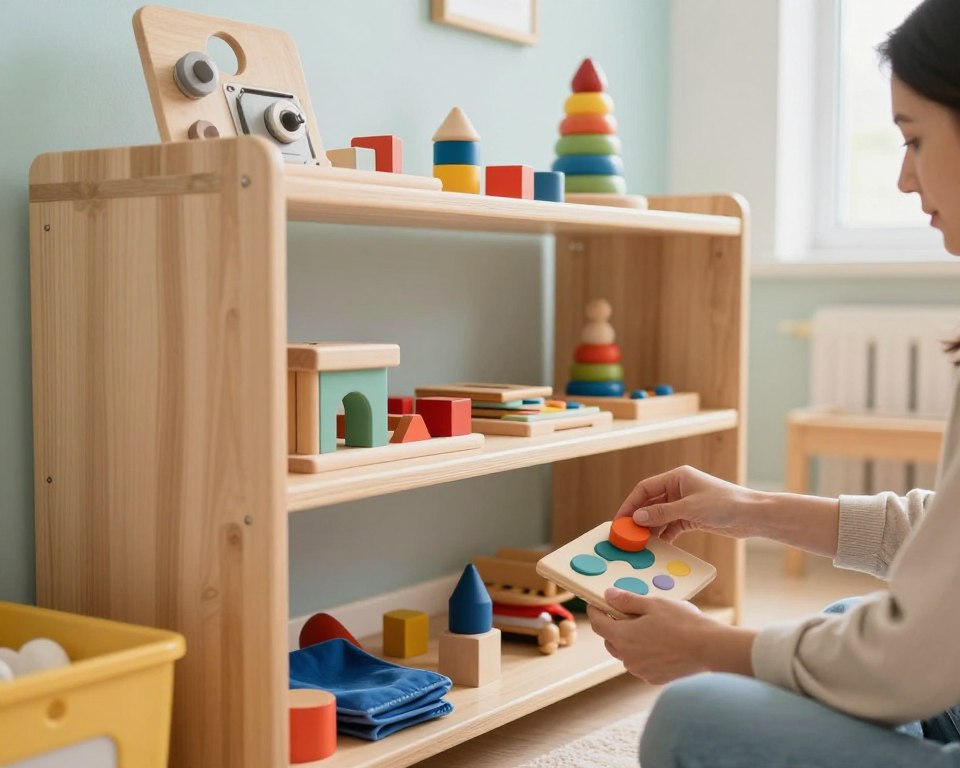
Choosing the Right Shelf and Materials
Look for a low, open-front unit. Many families love the affordable IKEA KALLAX. The Sprout shelf is another excellent, purpose-built choice.
Measure your space first. A small 2×2 cube unit often works perfectly. The most important factor is stability and safety.
Natural wood is ideal for its calm feel and durability. But any sturdy, child-safe materials will do.
Incorporating Open Display and Accessibility
Resist using closed bins on the unit itself. Every item should be visible without digging. This clear view invites deeper engagement.
Place each set of playthings on its own tray or in a basket. This defines the activity and makes transport easy for little hands.
Design is a process of observation and adjustment. If your child can’t reach it or carry it, refine your setup. Your perfect, functional space will emerge.
Key Principles Behind Effective Montessori Shelving
Have you ever noticed how a beautifully set table makes a meal more inviting? The same principle applies to your child’s activities. The magic isn’t in the items themselves, but in how you present them.
Small design choices send a powerful message. They tell your young one, “You are capable.” Let’s explore the core ideas that turn a simple storage unit into a launchpad for growth.
Using Trays, Baskets, and Labels
Think of a basket or tray as a visual boundary. It shows your child that everything inside belongs to one complete experience. This clarity reduces confusion and helps them focus.
A tray with handles makes transport easy. Your little one can carry a whole activity to their workspace without dropping pieces. It’s a simple way to foster success.
Here’s a counterintuitive tip: leave the puzzle pieces loose. A finished product is less inviting than an open-ended challenge. An “undone” state calls them to engage.
Labels are helpful guides for the whole family. Use pictures or shapes so your child knows where things belong. This supports the habit of returning items to their designated place.
Encouraging Independence Through Design
True independence is designed, not demanded. Get down to your child’s eye level. Can they reach everything easily? Is the path clear?
When you arrange things with their perspective in mind, you remove small frustrations. This builds their confidence and sense of capability. They learn, “I can do this myself.”
These principles work together seamlessly. Clear baskets, easy transport, and thoughtful placement create an environment where your child naturally takes the lead. The reward is watching their confidence bloom.
Organizing and Rotating Toys for Continuous Engagement
What if a little bit of behind-the-scenes organization could make old favorites feel new again? The liberating truth is you don’t need to display every plaything you own. Having fewer options visible leads to more focused, engaged play.
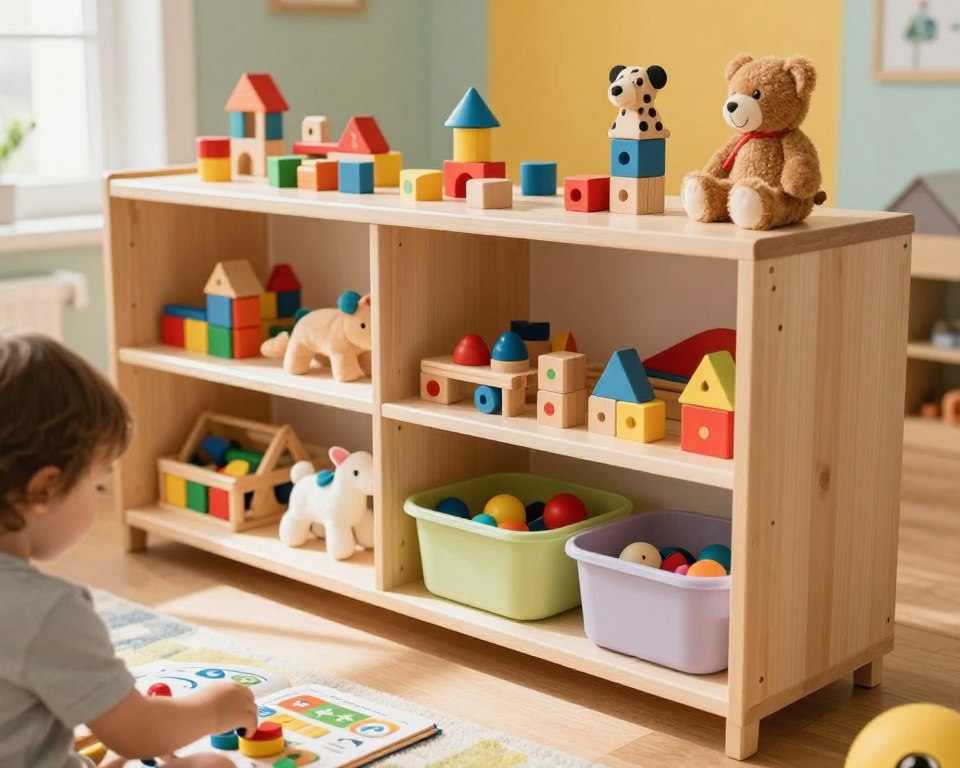
Effective Rotation Strategies for Maintaining Interest
Watch how your child interacts with what’s available. Let that guide your decisions. If something is being thrown or ignored, it may be time for a change.
You don’t need to swap everything at once. Keep favorites that get regular use. Refresh just a few activities to renew interest. This partial rotation is less disorienting.
Troubleshooting Clutter and Overcrowding
Store items not in use in an organized way. Use labeled boxes by type or age group. This makes finding things easy when it’s time to switch.
Get creative with storage space. Try under beds or in closets. Discrete cupboards that blend with walls keep visual clutter low.
If your storage is bursting, honestly assess what’s been outgrown. Pass those toys to other families. This mindful approach supports peaceful play and keeps engagement high.
Adapting Montessori Shelves for Different Age Groups
As your little one grows, their play environment should grow right alongside them. The specific materials on their shelves need to match their developmental stage and emerging skills.
Setting Up Infant-Friendly Shelves
For babies around six months, keep it simple. A low unit with just three or four items works perfectly. Think of a sphere in a bowl, a maraca, a wooden roller, or water blocks.
These activities focus on exploratory play and hand development. Everything is about discovery through the senses. As your infant progresses, you might add an egg in a cup or an object permanence box.
Designing Toddler Spaces for Exploration
Toddler montessori shelves typically expand to two or three levels. This matches their growing mobility and capability.
Great example materials include wooden stackers, peg boards, and bead stringing. Puzzles and geometric sorting boards are excellent too. These activities intentionally build on infant experiences.
The child who mastered the sphere is ready for more precise work. You might set up units in different rooms. A quiet bedroom classroom and a common space for exploration is a good example.
Offer six to twelve activities total, depending on your child’s interest. The right materials match where they are right now. Observation is your most important skill.
Practical Tips for Implementing Montessori Storage at Home
You don’t need a dedicated playroom or a big budget to create an organized, peaceful space for your child. The real magic happens behind the scenes with smart, hidden systems. These practical tips will help you set up a functional area that grows with your family.
Budget-Friendly Storage Solutions
Start with an affordable, open-front unit like the IKEA KALLAX. Secondhand wooden shelves work beautifully too. The goal is accessibility and stability for your little one.
Get creative with your storage areas. Look under beds, behind sofas, or in coat closets. One family even used a shower stall with a curtain in their open-plan home—a clever way to maximize space.
Choose furniture that matches your walls. This discrete approach keeps the area calm and reduces temptation. It’s a simple tip that makes a big difference.
Organize by type—all puzzles together, all art supplies in one place. Use labels on boxes so everyone knows what’s inside. This saves time and maintains order.
White cardboard boxes or fabric bags keep small sets intact. Ensure enough shelves inside cupboards so items don’t stack dangerously.
Keep empty baskets and trays in a dedicated spot. If your kids show interest in the storage cupboards, a calm “That’s private” often redirects them.
Regularly pass on outgrown items. This creates space for what matters now and simplifies your life. It’s a liberating way to keep your home clutter-free.
Conclusion
Every small step you take towards intentional organization is a gift to your family. This approach transforms your living space into a nurturing environment where your child can thrive.
Your perfect setup doesn’t need to look like anyone else’s. It just needs to support your home’s unique rhythm. Focus on low, accessible units and thoughtful rotation of materials.
Start with just one cleared area. Add a few baskets and observe the change. You’ll notice deeper focus and growing confidence in your little one.
The real goal isn’t a tidy room. It’s fostering your child’s sense of capability and inner security. When you create an environment they can navigate independently, you’re saying, “I trust your potential.”
You have all the ideas and principles you need. Let your unique knowledge of your child guide you. Embrace this process with patience and watch them flourish.